Nature as Technology
Nature as Technology
URP 532 Sustainable Planning Scott Campbell
URP 532 Sustainable Planning Scott Campbell
The idea of performing computational processes with a brain or integrating it directly into technology has been a recurring theme in media and speculative fiction. Movies such as Transcendence (2014) explores a consciousness uploaded into a computer, while The Matrix (1999) depicts human brains used collectively as batteries for a simulation. Within this theme lies a perspective where one interprets the various reactionary biomechanics of living organisms as data streams. An example of this would be if you saw a cat pull back its ears, it could indicate that it is frightened due to its visual data cues. Taking a technologist approach towards nature and viewing biological responses as quantifiable information is what I will be examining today. Specifically, I will explore the use of nature as biomonitors (defined as living organisms used to obtain quantitative or categorical data), the implications of digitizing these biomonitors, their historical use, and the ethical hazards present.
What initially interested me in this topic was learning about mussels in Warsaw, Poland, that monitor drinking water quality. The Warsaw Waterworks employs eight sharp-edged river mussels whose shells are monitored to observe the degree to which they open or close in response to the water around them (Scott). As filter feeders, mussels naturally close their shells when excess pollutants are present in the water supply. They react to a broad spectrum of triggers, primarily heavy metals, pesticides, or other toxins. These mussels are not the sole line of defense. Humans still act as a final barrier in testing the water quality. So, why add this extra step in creating a mussel biomonitoring system for water if it is redundant? One advantage mussels offer is continuous monitoring rather than periodic sampling. Traditional tests rely on sampling, meaning data is gathered only when a sample is taken. Continuous monitoring, like that provided by the mussels, allows for a consistent, real-time stream of data on water quality. Mussels also possess broad sensitivities that generally align with pollutants concerning humans. This contrasts with traditional sampling tests, which must be designed to identify specific pollutants requiring more targeted engineering. Lastly, conventional testing can be expensive, whereas the mussels can provide a cheaper alternative. A waterworks aims to test frequently for safety while minimizing redundant, costly procedures. The mussels serve as an early warning system, tapping into their natural aversion to pollutants to potentially safeguard human lives. Because of these strengths, this system is beginning to be implemented in other European and North American cities. Respect shown by the Warsaw Waterworks towards their mussel biosystem is also commendable; they do not see them merely as tools or data streams but refer to them affectionately as coworkers.
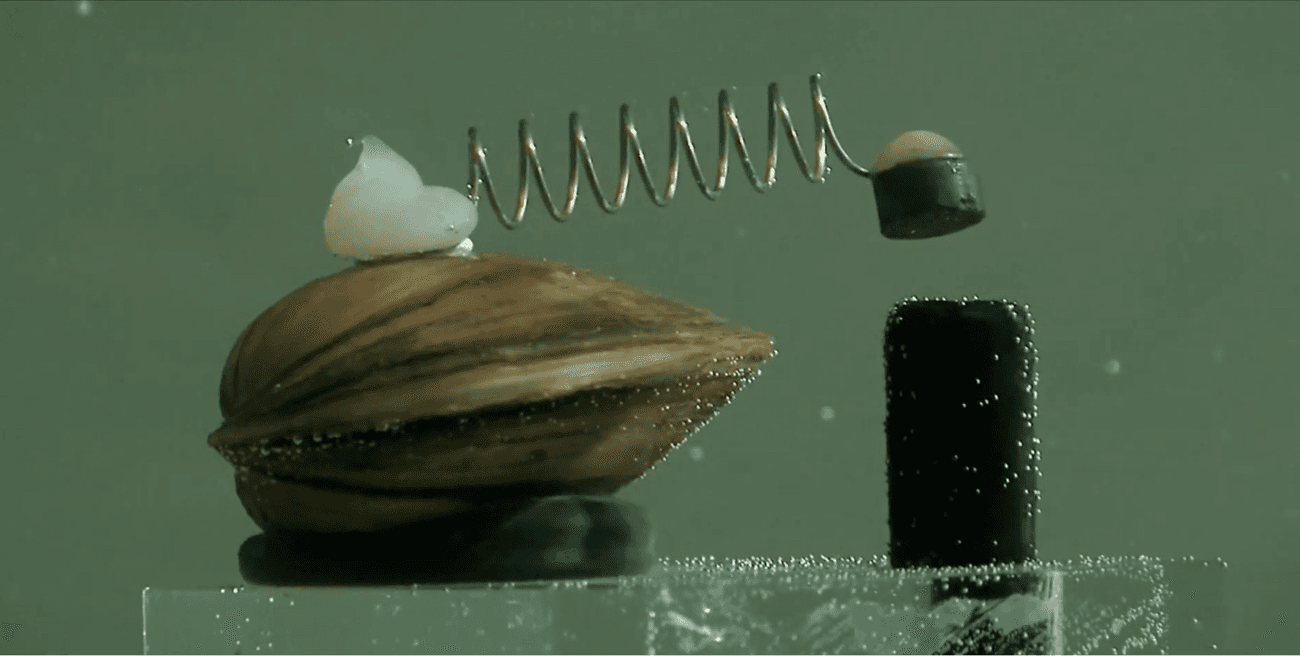
Clam in Warsaw Detecting Water Quality
Photo: Warsaw Municipal Water and Sewage Company
Portland, Oregon, historically relied on a single comprehensive mobile air quality monitor capable of detecting not only which heavy metal pollutants were present but also their concentration. However, this monitor can be expensive to operate and only gathers localized data from its current position. This created a need for more widespread, localized air quality data that could be gathered more cheaply. Turning to nature for solutions, researchers identified moss samples as potentially game-changing. Researcher Sarah Jovan of the U.S. Forest Service developed a method for testing moss and lichen samples from various areas for heavy metals, allowing targeted follow-up with the more expensive machinery to confirm findings. Mosses are among the oldest known plants and possess relatively simplistic cellular structures. Their simpler cell walls are easily permeable by airborne pollutants, which they retain, exhibiting traceable physiological reactions (Macedo-Miranda G et al.). It is important to note that this moss does not record precise quantities; rather, they indicate the presence and approximate amount of pollutants. High pollution levels can also kill the moss, posing a challenge in heavily polluted urban areas. Nevertheless, testing dozens of locations around Portland using moss cost approximately the same as running the large mobile monitor once (Nichols). The results of this initial study sparked a scandal involving a local polluting glass producer, ultimately leading to new environmental legislation in the city.
Inspired by the Portland study, residents of the Duwamish Valley in Seattle, living near an industrial center, suspected they resided in a contaminated region. Local activists organized community science initiatives, involving local youth alongside scientists, to gather moss samples in surrounding residential neighborhoods and test them in makeshift laboratories. They discovered not only that the youth participants were as accurate in conducting the tests as the scientists (demonstrating the method's accessibility) but also confirmed the presence of pollutants in their neighborhoods (Nichols). This evidence was then used to engage officials and advocate for environmental justice within the community. These examples of utilizing moss to report air quality data demonstrate how lowering the financial and technical barriers to monitoring moves towards a democratization of environmental data. There have been long-standing equity issues related to accessing environmental data and the resources needed for reporting. This grassroots approach empowers communities previously excluded from environmental monitoring, providing them with the data needed to advocate for healthier living conditions.
These contemporary examples of biomonitors are not the only ones, nor is the concept entirely new. Indicator species whose presence, absence, or condition tells us something about an environment's health or other characteristics have been utilized throughout human history (Sumudumali & Jayawardana). The idiom ‘canary in the coal mine’ exemplifies this; canaries are highly sensitive to oxygen levels, so if oxygen decreased in a mine, the bird's distress or death would warn miners of impending danger. Indicator species are often integral to indigenous knowledge systems. Other traditional methods rely on phenological indicators, using an organism's life cycle event,like flowering or migration, to signal the timing of other events. For instance, the Lil’wat First Nations traditionally used the blooming of wild roses as an indicator for when to start harvesting specific grasses and materials for basket making. Epistemologically, perhaps this reliance on indicator species stems from our innate human ability to recognize patterns. After years of observing how our surroundings adapt to change, we utilize that observed information to create condensed knowledge or teachings passed down through generations. However, like many aspects of our lives, our use of indicator species is increasingly going digital. Companies like Electric Plant Co. are developing general-purpose biosensors attempting to tap into plants' encoded electrical signals. Their goal is to access information about factors like ozone levels, light requirements, stress levels, UV exposure, pest attacks, infrared light perception, groundwater conditions, formaldehyde presence, and more (Electric Plant Co). This represents a level of bio-integration that could allow us to perceive a wider range of an organism's sensory inputs or physiological state. This leap towards technologically mediated sensing is promising, but the current trajectory of using biomonitors and creating a new level of relationship between bio-centric systems and humans brings new ethical dimensions into focus.
The increasing ability to digitize and interpret the biological signals of other organisms for biomonitoring has been raised as a vital issue to consider. What responsibilities do we assume when we employ living organisms primarily as data-gathering tools? Furthermore, many biomonitoring methods, particularly non-phenological ones, still rely on detecting an organism's stress or harm response. This forces us to confront the ethics of intentionally utilizing these negative states for data acquisition, even if the methods are potentially less immediately lethal than historical examples like the canary in the coal mine. The core ethical tension lies in balancing potential human and environmental benefits against the welfare and intrinsic value of the monitored organisms. Consideration must also be given to how these organisms are treated during the monitoring process. For example, the Warsaw Waterworks keep the mussels in purer environments than a river mussel would otherwise reside in, and their ethos towards the organisms is captured in how they refer to them as 'coworkers,' suggesting a level of respect beyond treating them as mere instruments.
There appears to be a difference between utilizing organisms such as mussels and moss that are likely indifferent to their role in these specific monitoring systems, and potentially more invasive or comprehensive monitoring of more complex organisms. As demonstrated, these simpler biomonitors can have a significant positive impact as cheap and broad-spectrum sensors. From a planning or engineering perspective, several considerations emerge when evaluating the use of biomonitors. One is to rely on these biological systems primarily for their broad sensitivities, recognizing they may not be suited for detecting highly specific compounds, and to supplement them with mechanical monitoring, especially in human-critical systems like drinking water. Another is to actively explore how the broad applicability and lower cost of certain biomonitors can enhance equity, as seen with the improved access to environmental data facilitated by moss monitoring in Portland and Seattle. Defining 'respectful use' versus 'exploitation' becomes crucial. We must carefully evaluate applications predicated on causing harm or eliciting defensive responses, ideally favoring methods where the organism is likely indifferent or minimally impacted. This also raises the question of should we prioritize investment in potentially costlier mechanical or chemical sensing technologies if doing so avoids the ethical complexities of using living beings, even seemingly simple ones? Ultimately, while viewing nature solely as a data stream risks profound instrumentalization, the thoughtful integration of biomonitoring that consciously weighs utility against ethical responsibility might offer a more holistic, interconnected, and potentially sustainable way to understand and protect our shared environment; moving towards a model of interdependent awareness.
Theo Berry, April 2025