Eastern Market Community Agriculture
Eastern Market Community Agriculture
DEC 2025
8 weeks
Urban Strategy, Experience Design, Brand Design
In collaboration with Owen Woertink, Will Richardson, Eric Li, and Adil Nazarov
Role: Research & Strategy, Data Analyst, Project Management, Graphic Designer, Game Designer
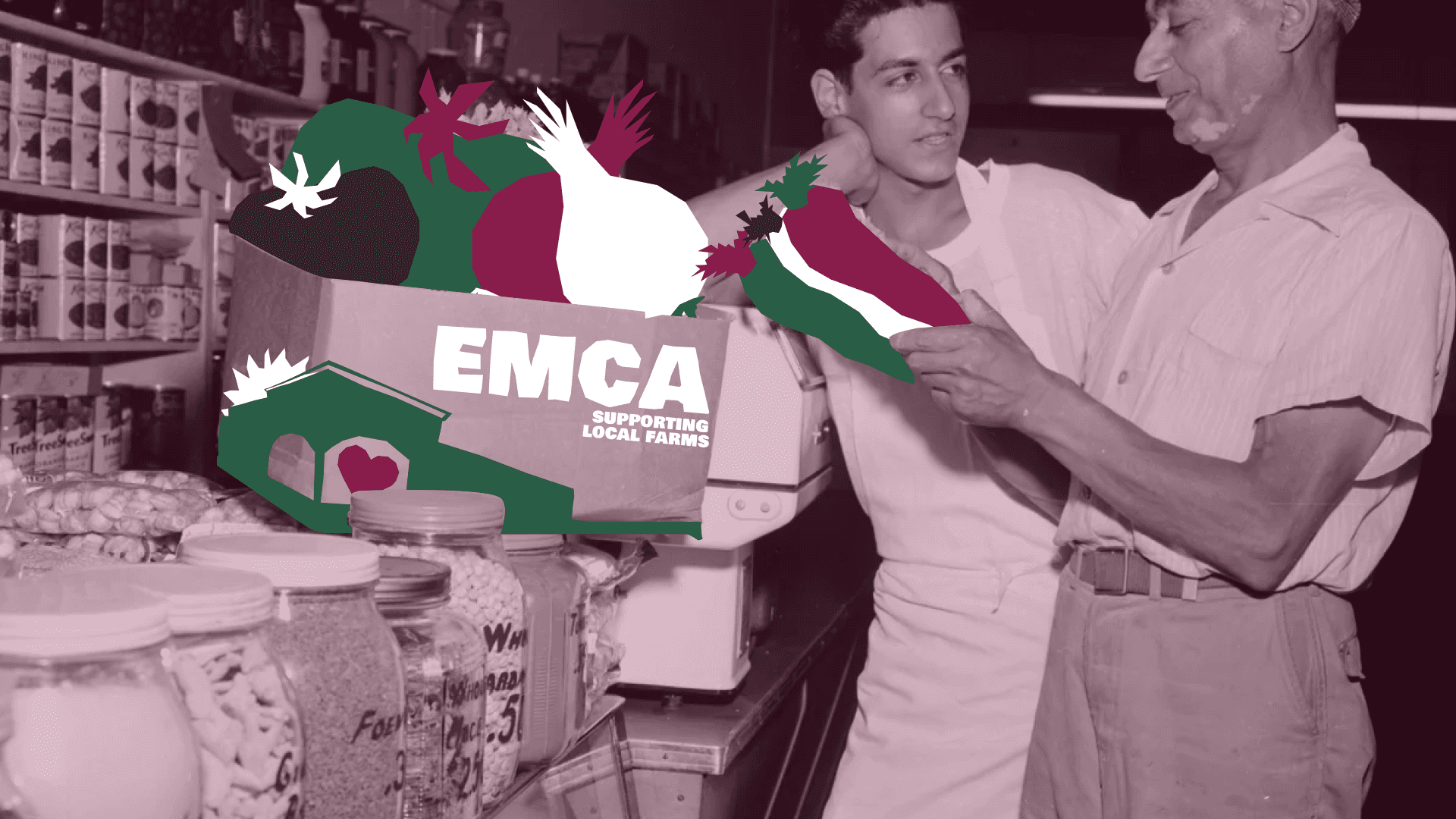
This project coalesced around a single prompt surrounding Detroit's Eastern Market (EM). As the largest farmers market in Southeast Michigan, EM has been in operation for over 100 years, hosting generations of local cultivators. It is a profoundly special place to many Detroiters, but its fate is entirely tethered to that of local farmers, whose livelihoods are increasingly threatened. We grounded our project in a single, driving question: "What best secures Eastern Market's future for the next 100 years?
Research & Findings
Our initial response was deeply research-driven. We conducted site visits and phone interviews with Detroit farmers, restaurant buyers, and regenerative agriculture specialists, pairing this with extensive desk research on the history of American agriculture.
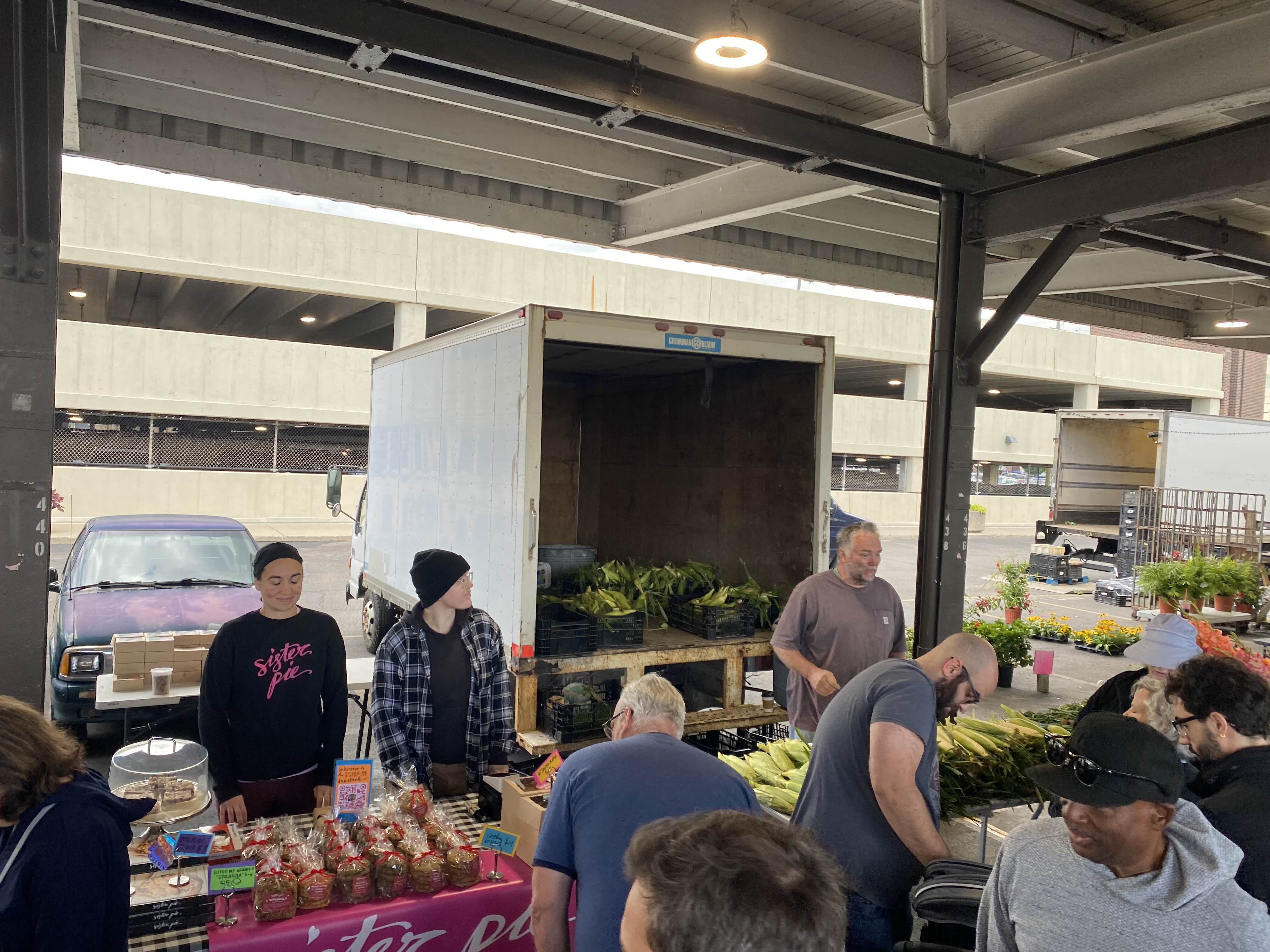
Tretter Family: 1st Gen Eastern Market Vendor
From Site Visit + Interview
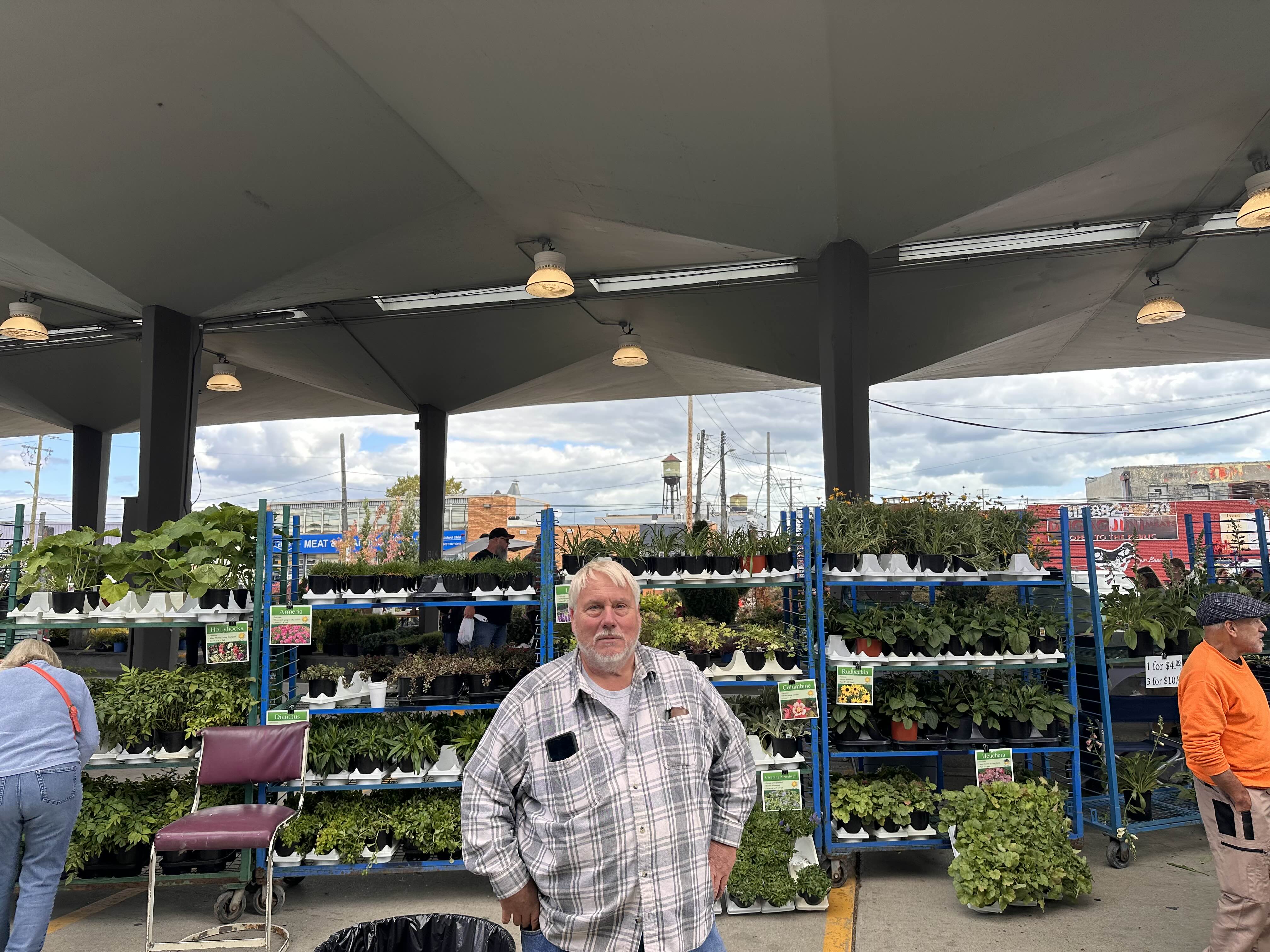
Eric of Perennial Gardens: 3rd Gen Eastern Market Vendor
From Site Visit + Interview
We synthesized our findings through two distinct lenses:
Systemic Vulnerabilities: We identified the direct, present-day frictions producers face. These included the monopolization of farming suppliers (stemming from Reagan-era agricultural policies), severe demand-side limitations caused by grocery buyer bidding wars, and the burden of diversifying tasks for farmers who, ultimately, just want to farm. *Farmers Just Want to Farm became a rallying cry for our group.
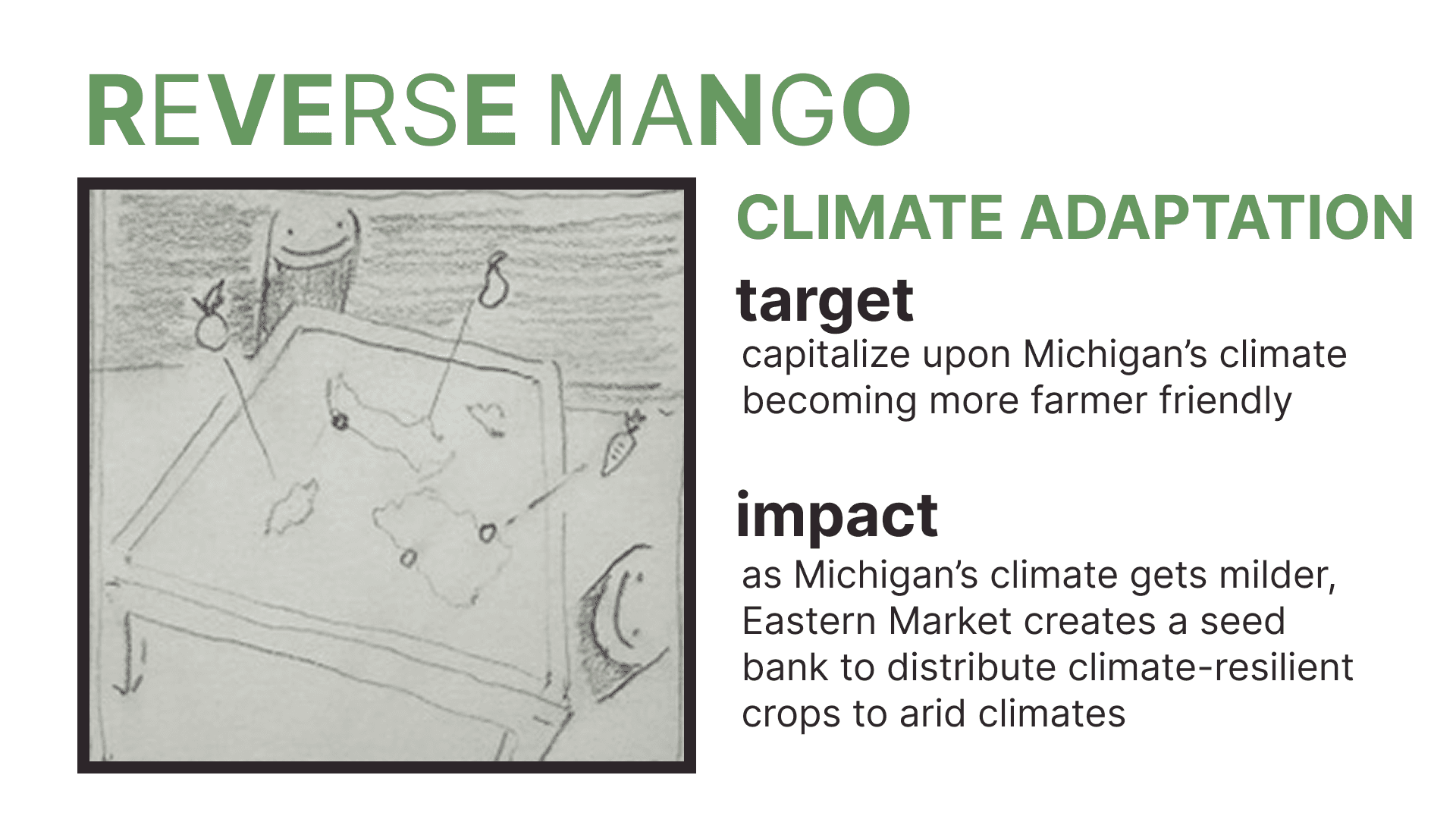
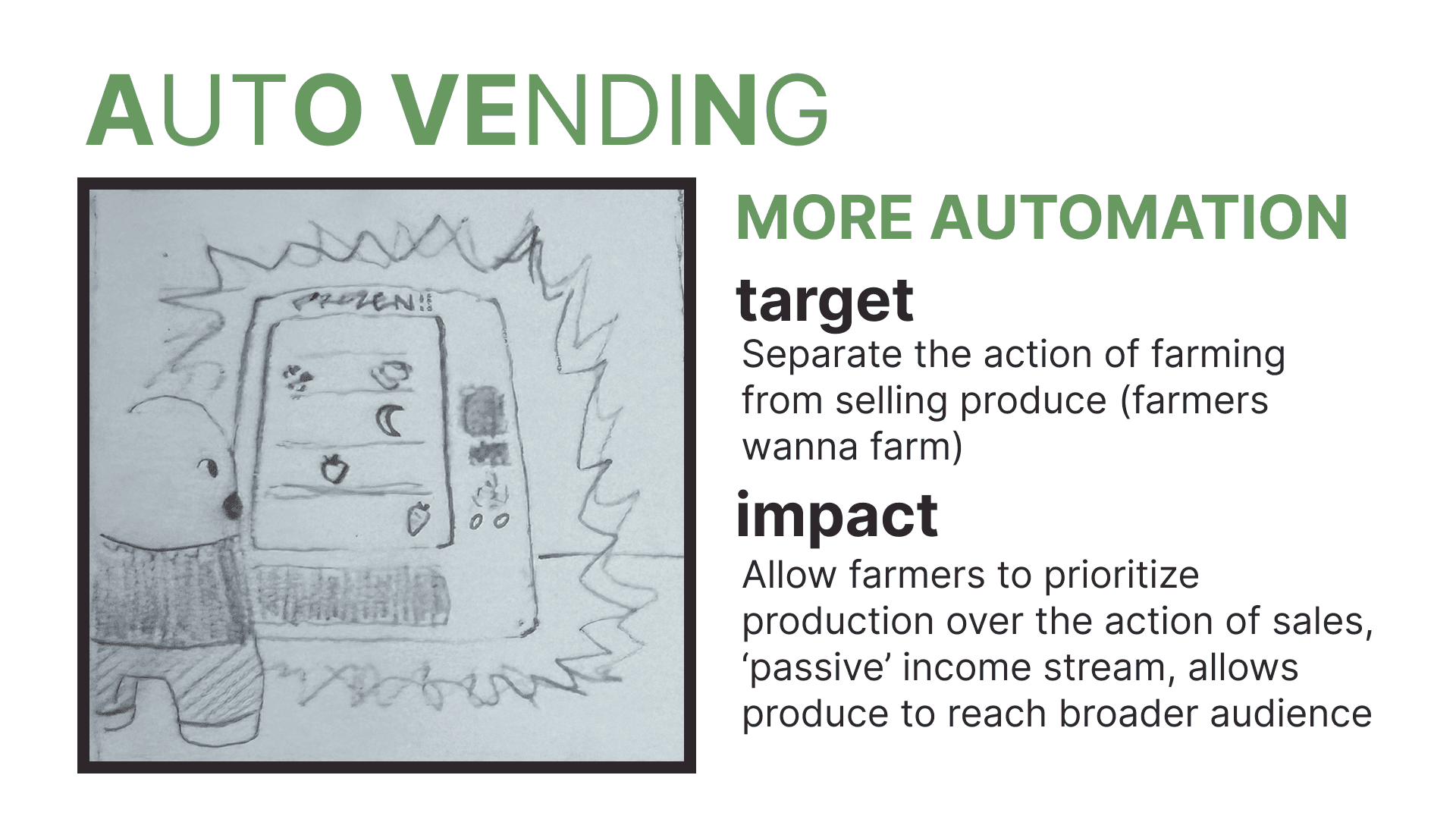
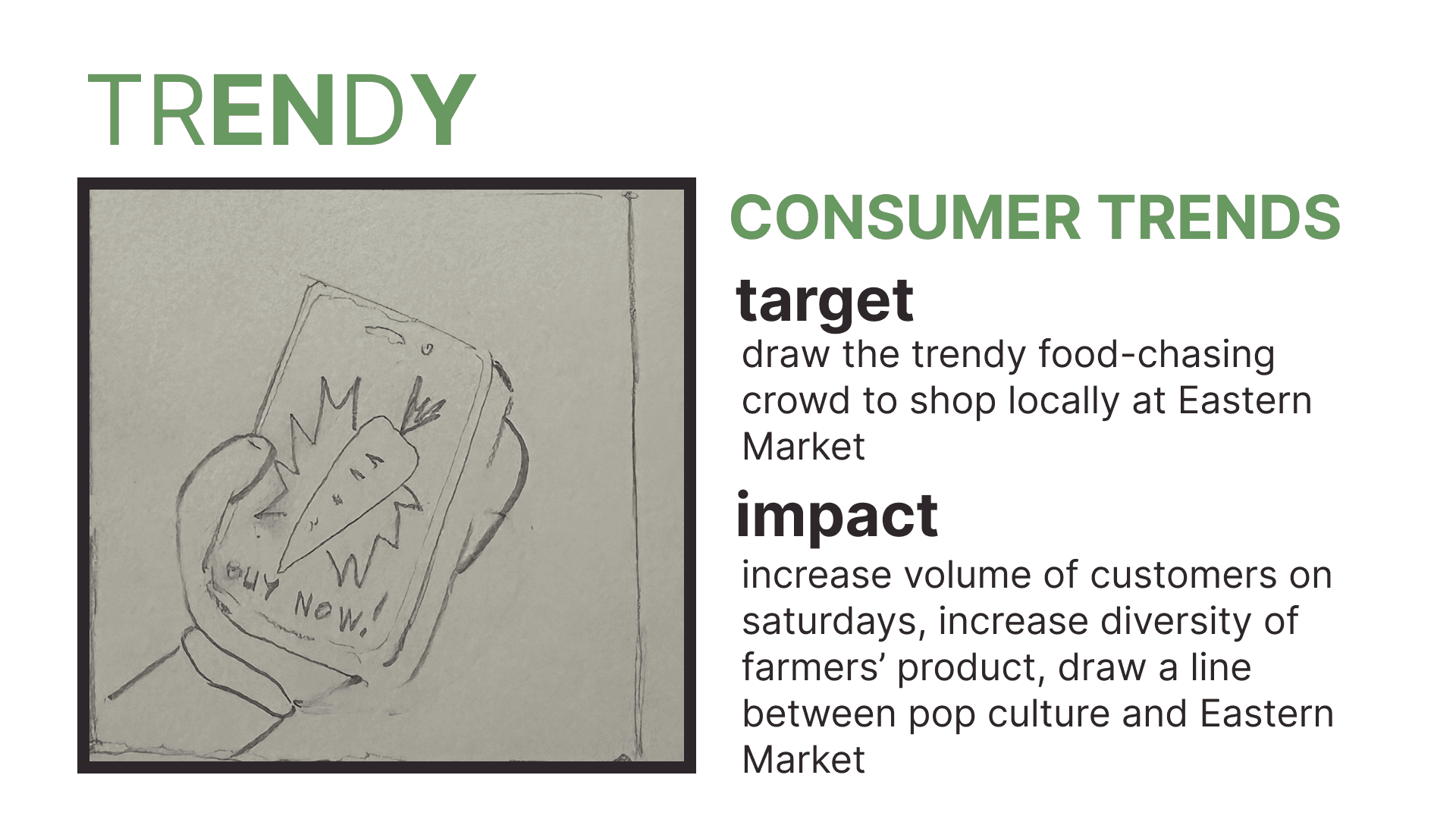
Future Trends: We thought of our foresight work in a Hancock and Bezold’s future cone framework to map possible, plausible, and unlikely scenarios. From our desk research we developed 10 emerging trends that will contextualize EM's future: More Connection to Food, More Food Trends, More Automation, More Data, More Climate Vulnerability, More Alternative Financing, More Y-Axis Farming, More Cost Parity, More Flexible Regulations, and More Waste
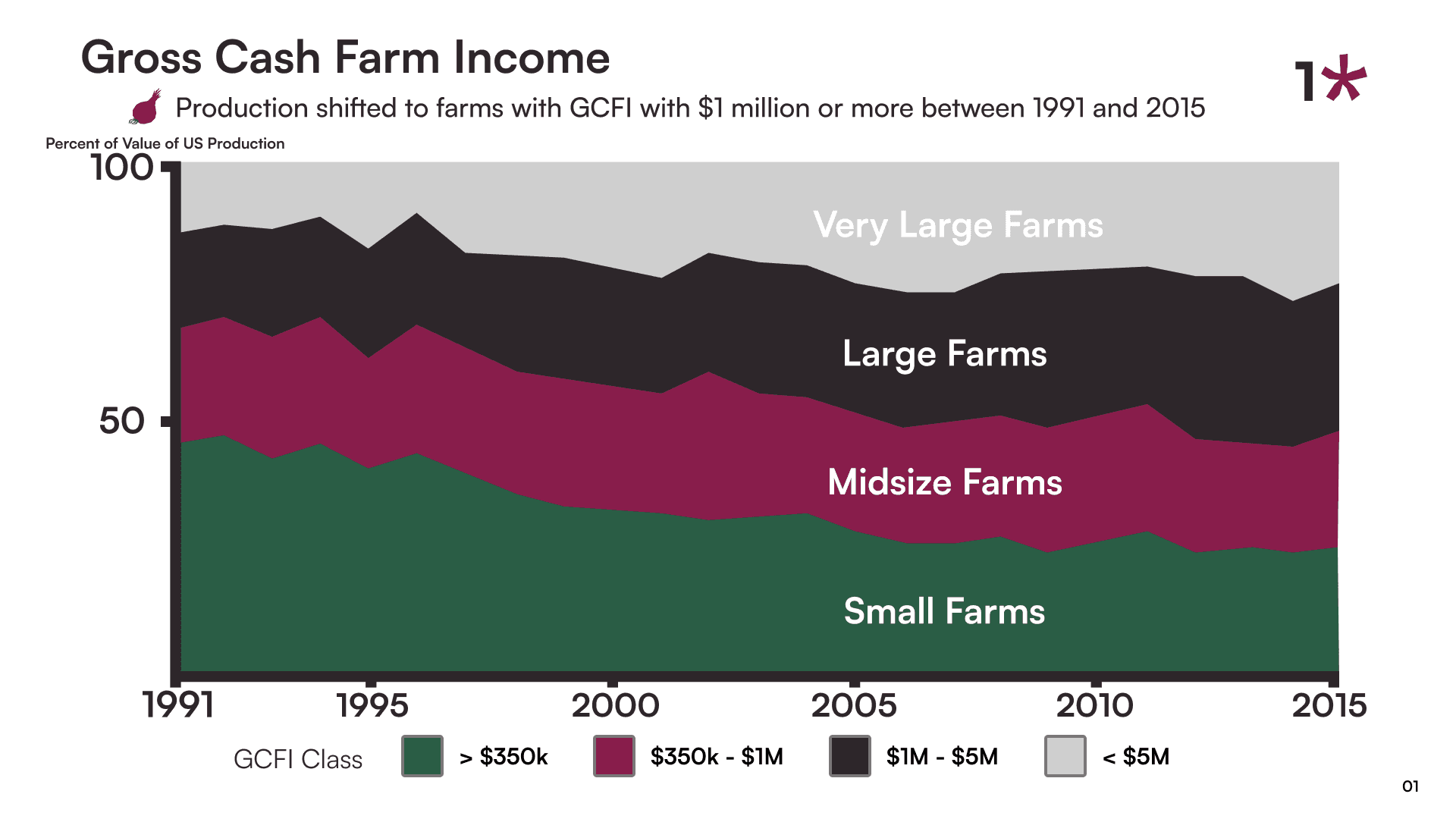
Small Farmers Make Less Money Than Before
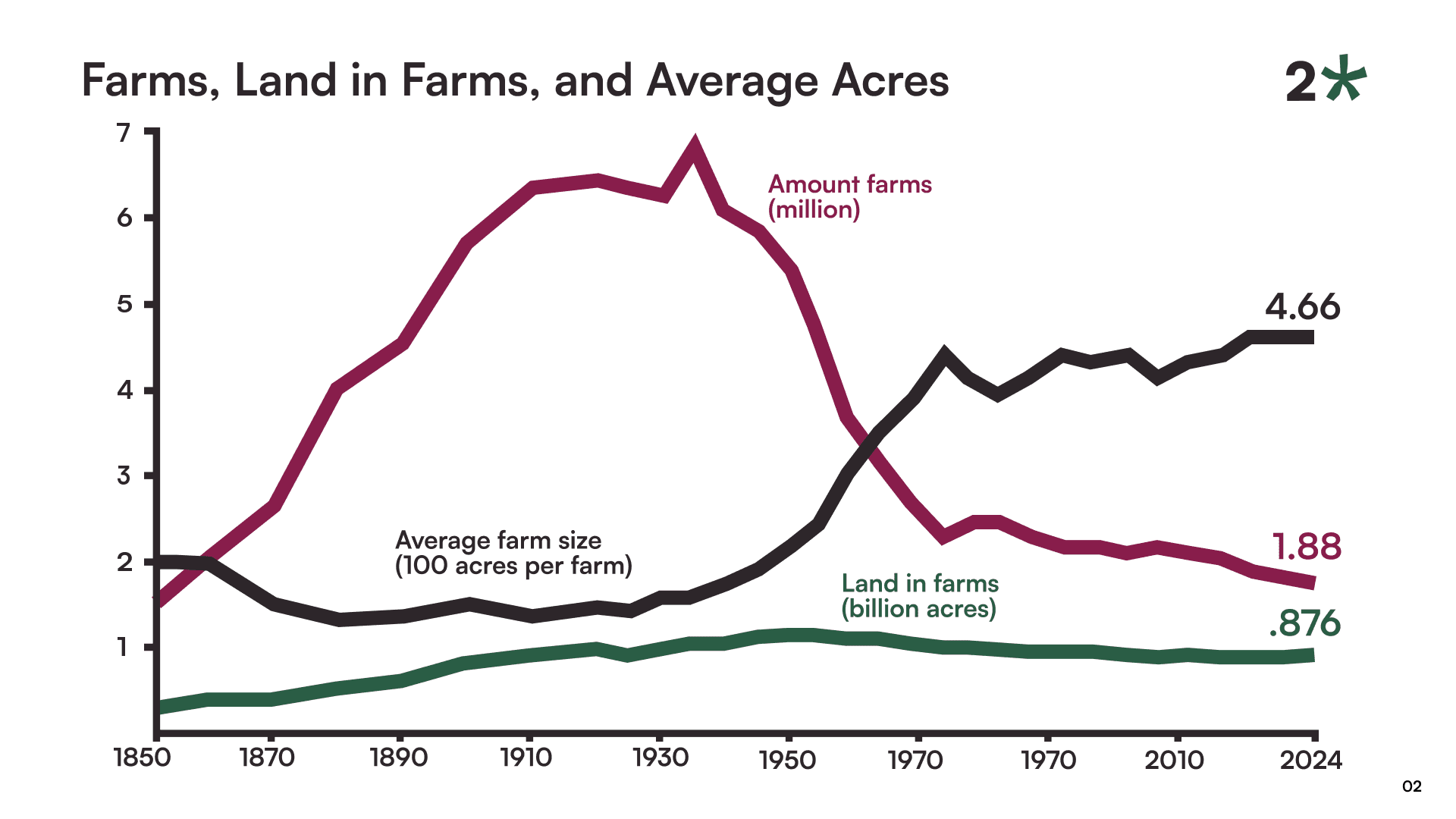
Farms are Rapidly Consolidating
Prototyping
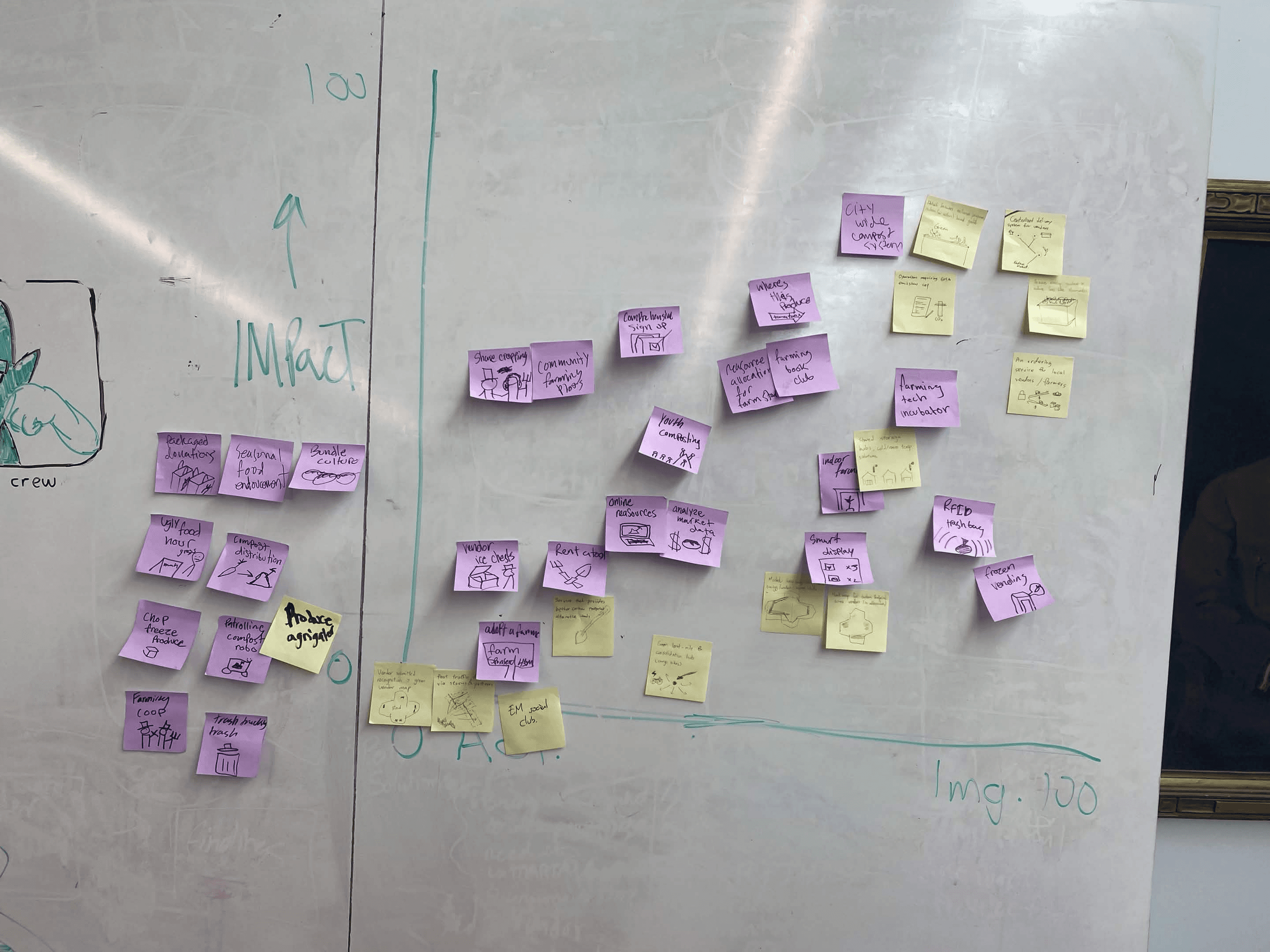
When transitioning to the solutions phase, we relied heavily on sketching and rapid prototyping to respond to these systemic issues. We generated dozens of concepts before realizing the most resilient solution required a broad-band approach.
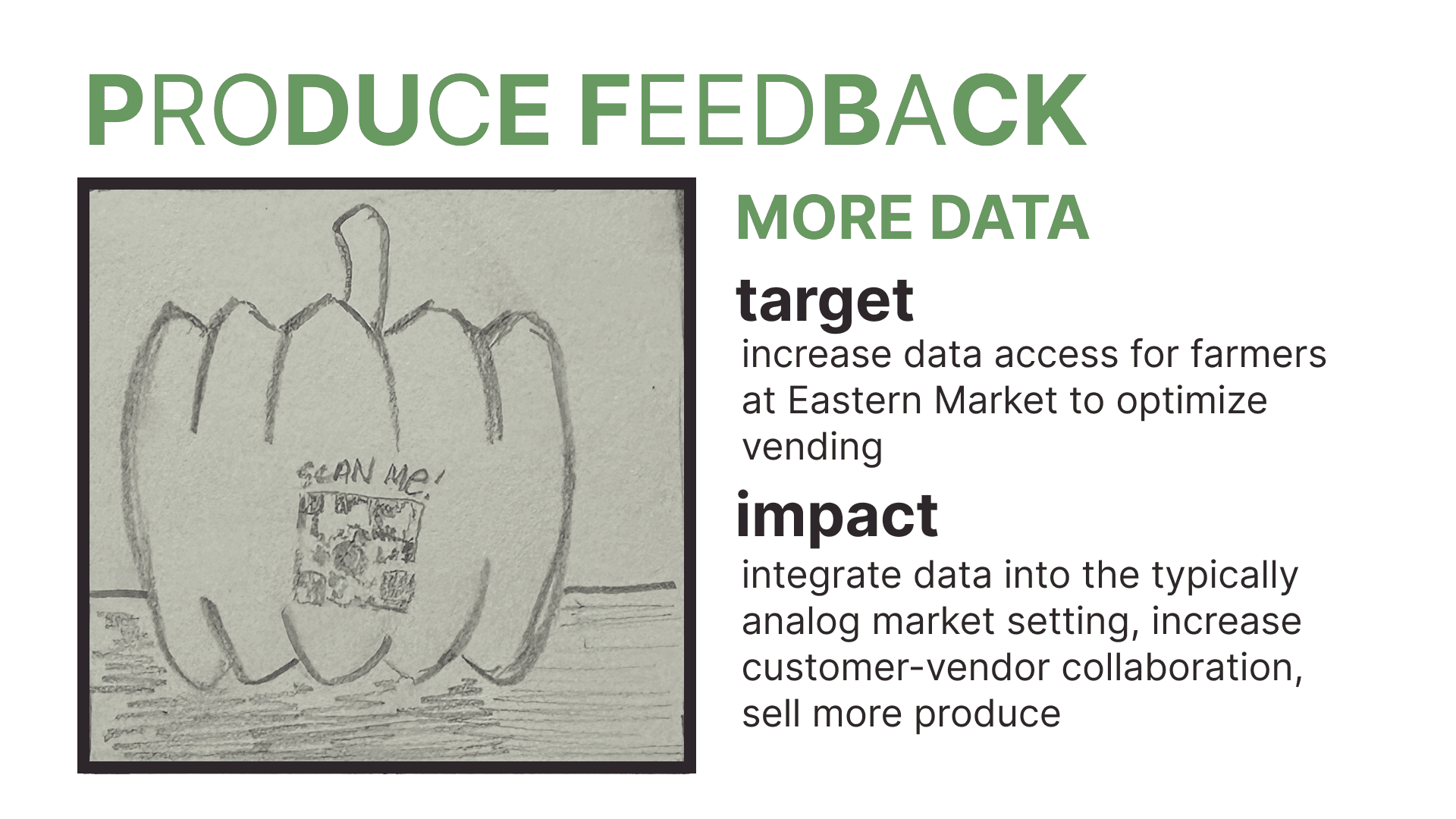
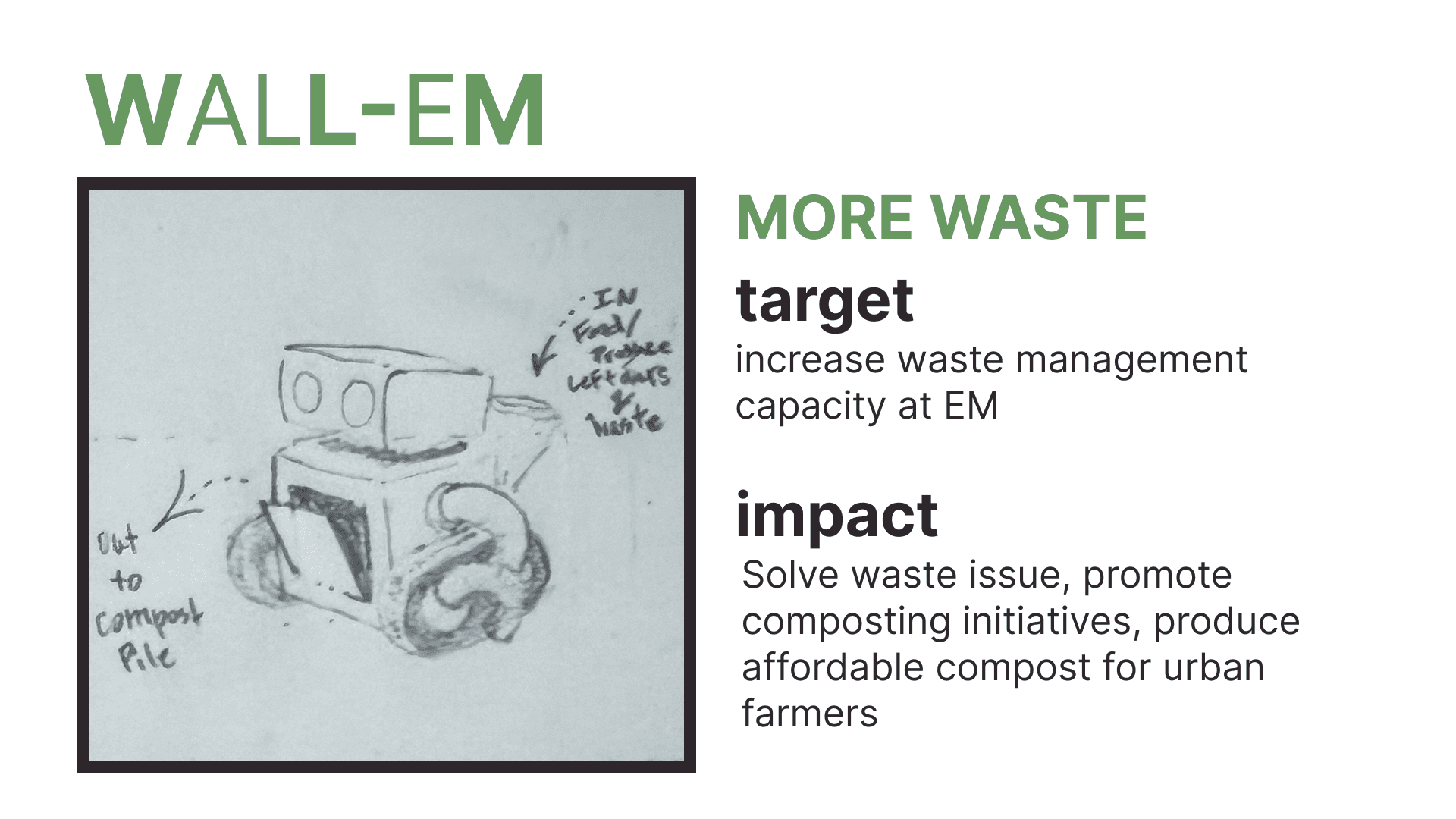
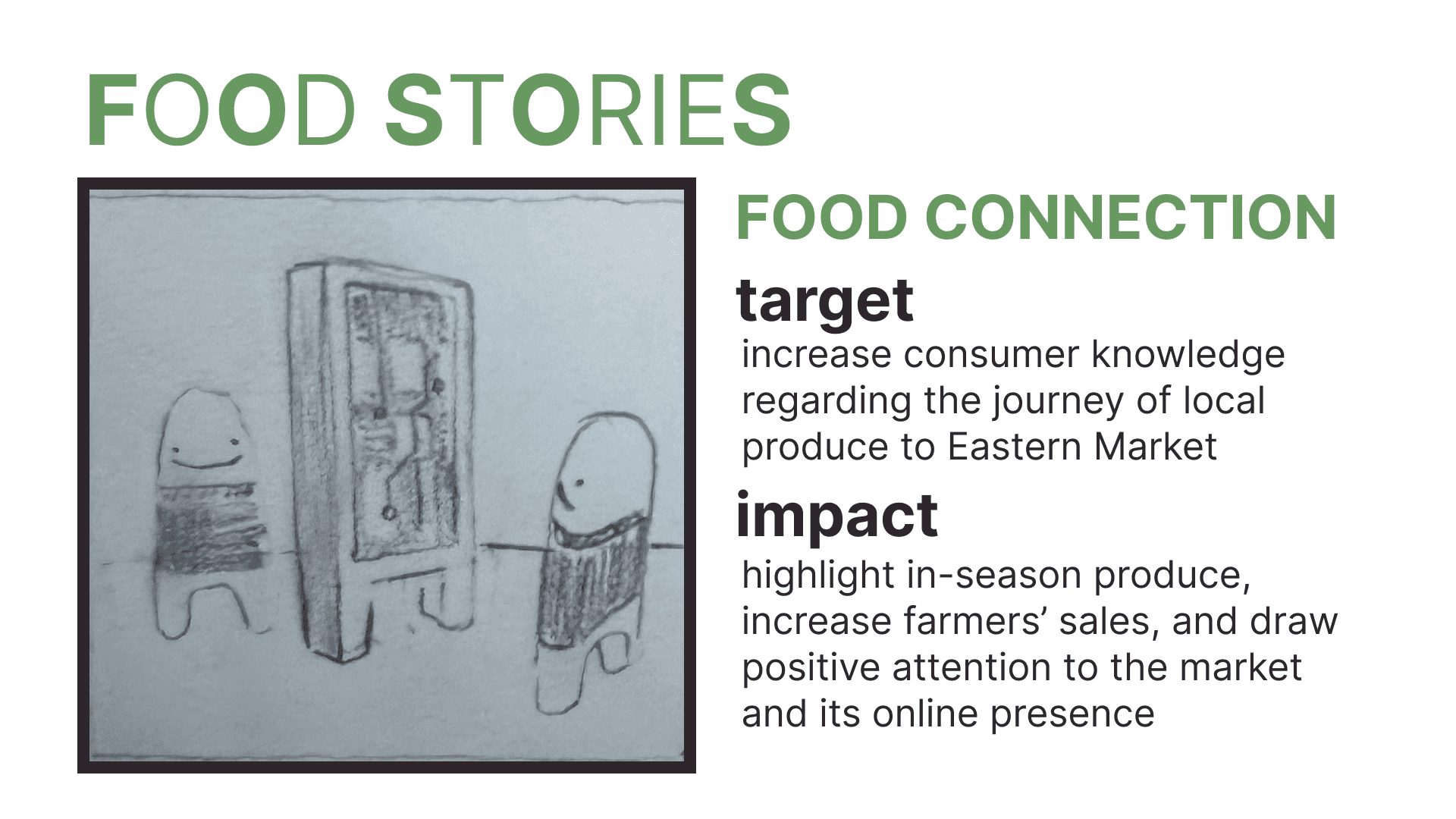
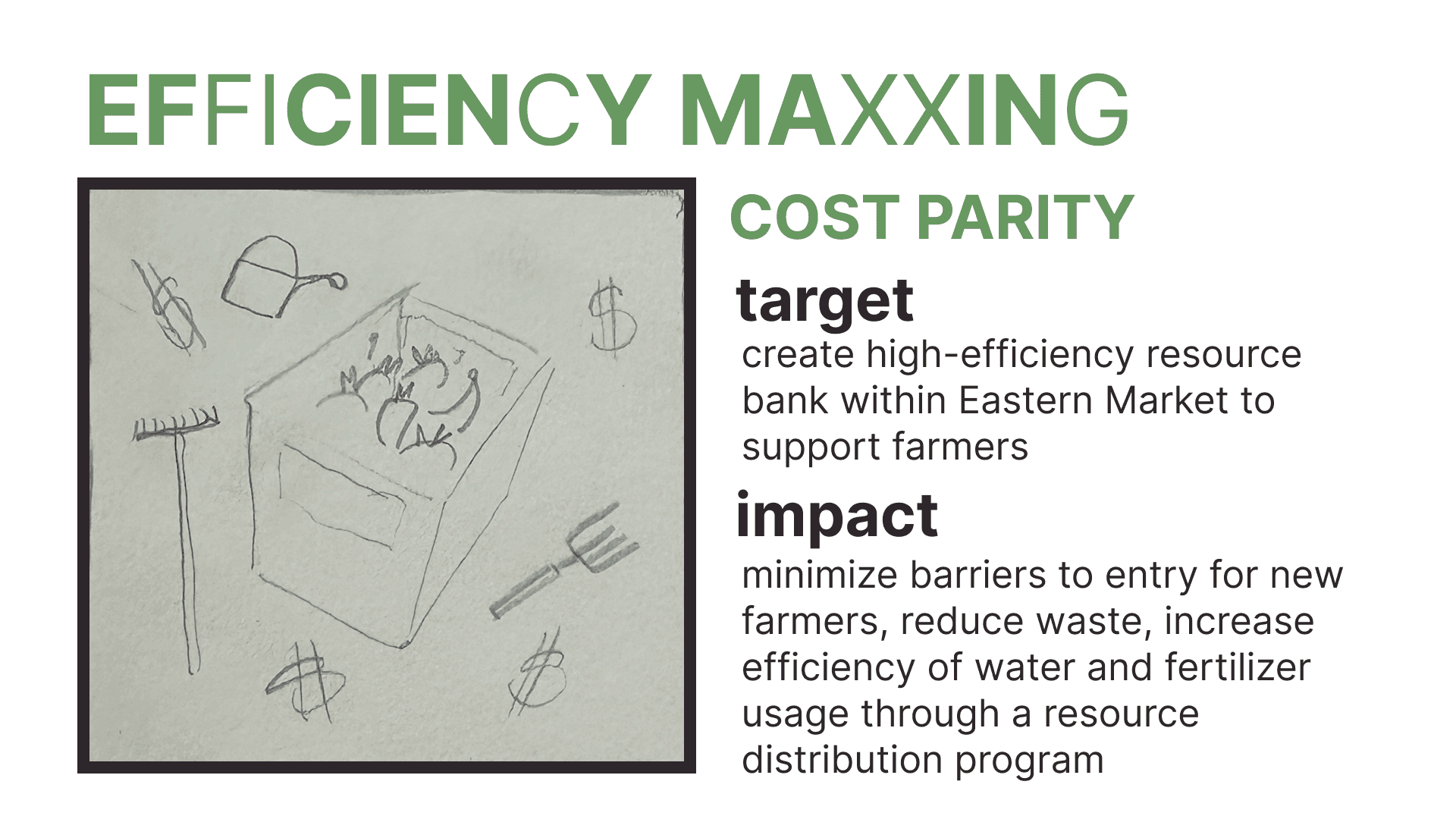
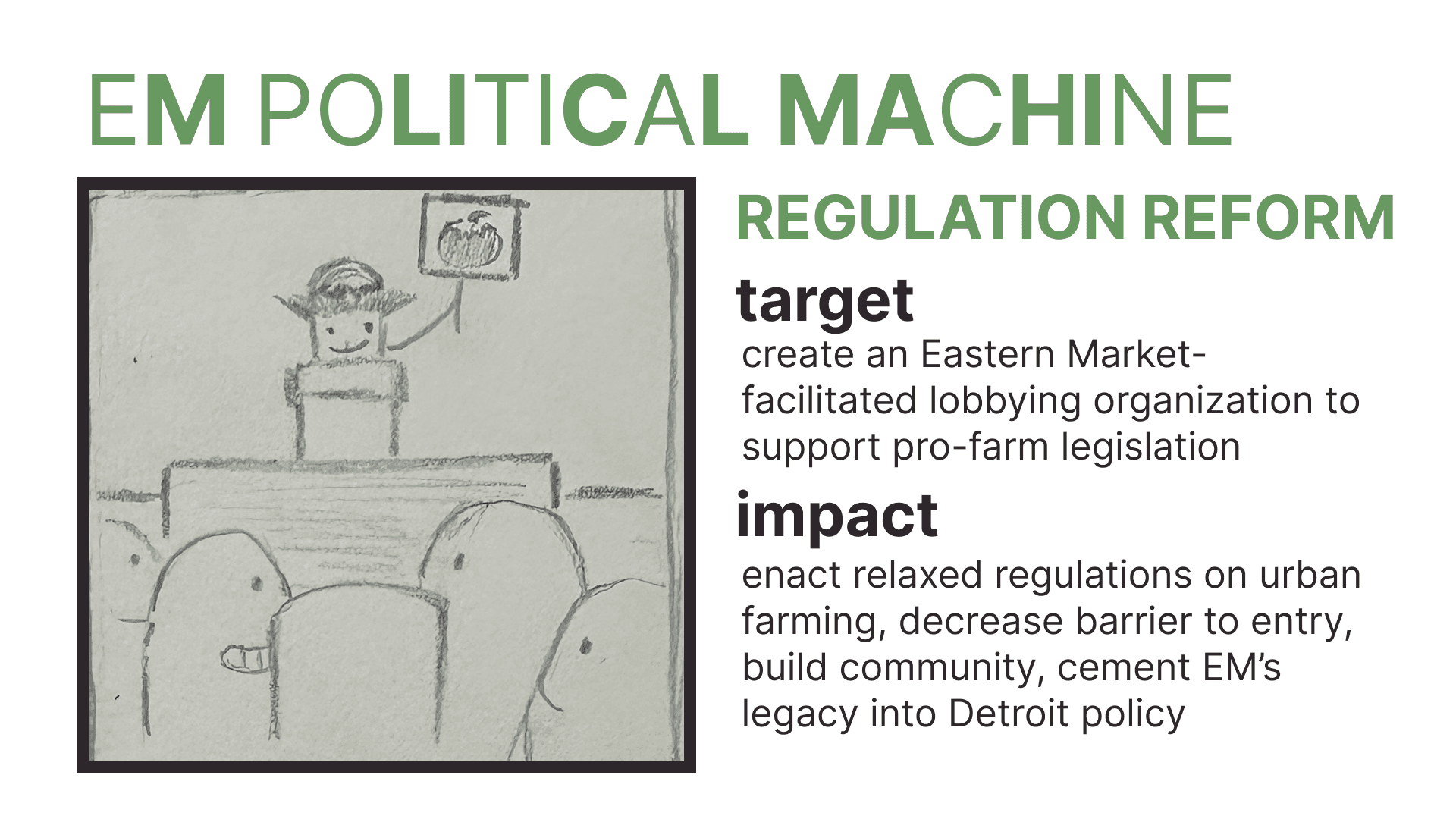
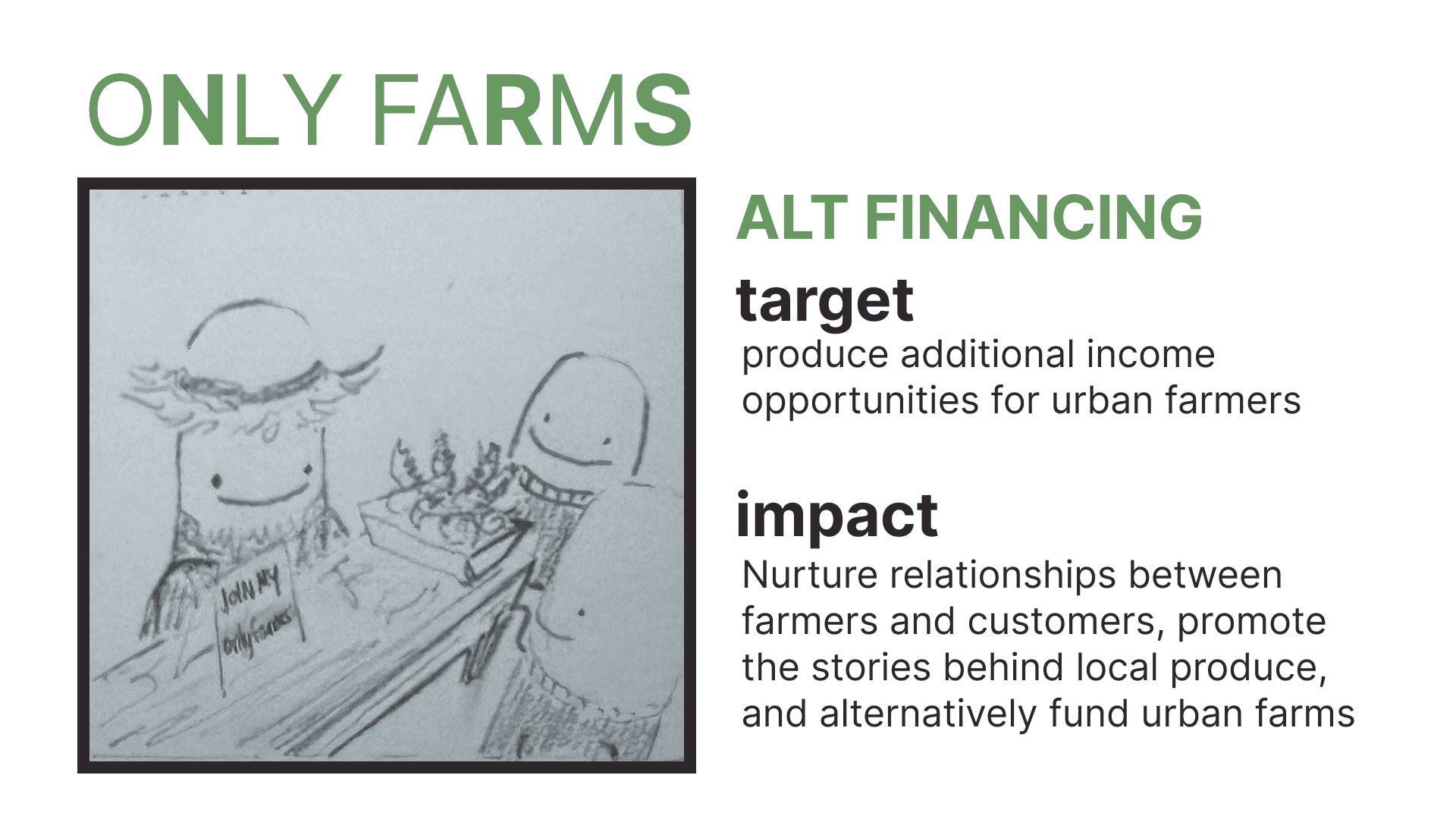
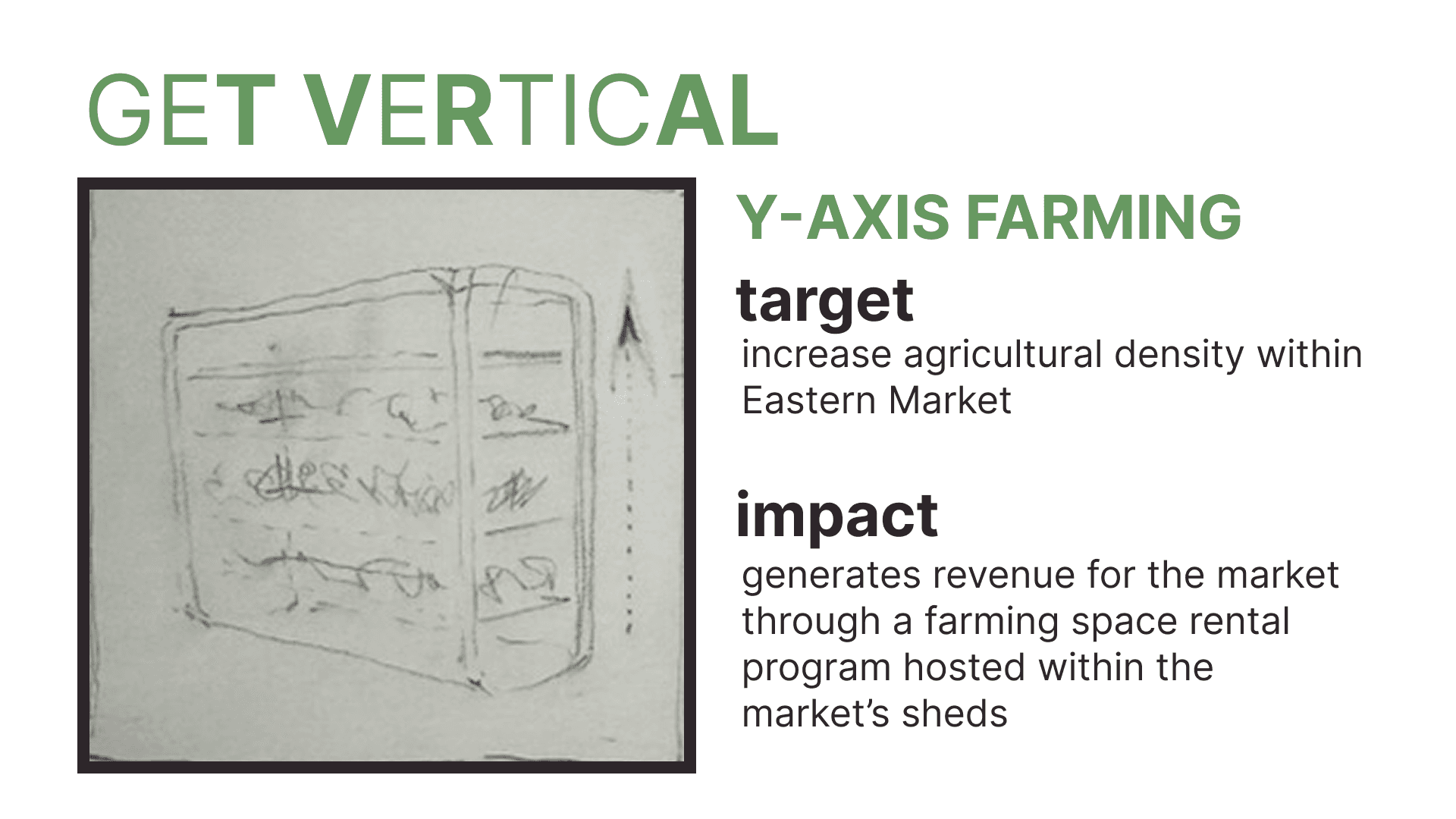
This synthesis became the Eastern Market Community Agriculture (EMCA) program. EMCA is a reimagined Community Supported Agriculture (CSA) model designed to increase the consumer's connection to food while radically improving economic outcomes for farmers. Leveraging the existing nonprofit network at Eastern Market, EMCA utilizes the current client base to route capital directly to producers. The business plan provides crucial preseason funding for small farmers while uplifting local food narratives to generate a distinct culture around Eastern Market produce.
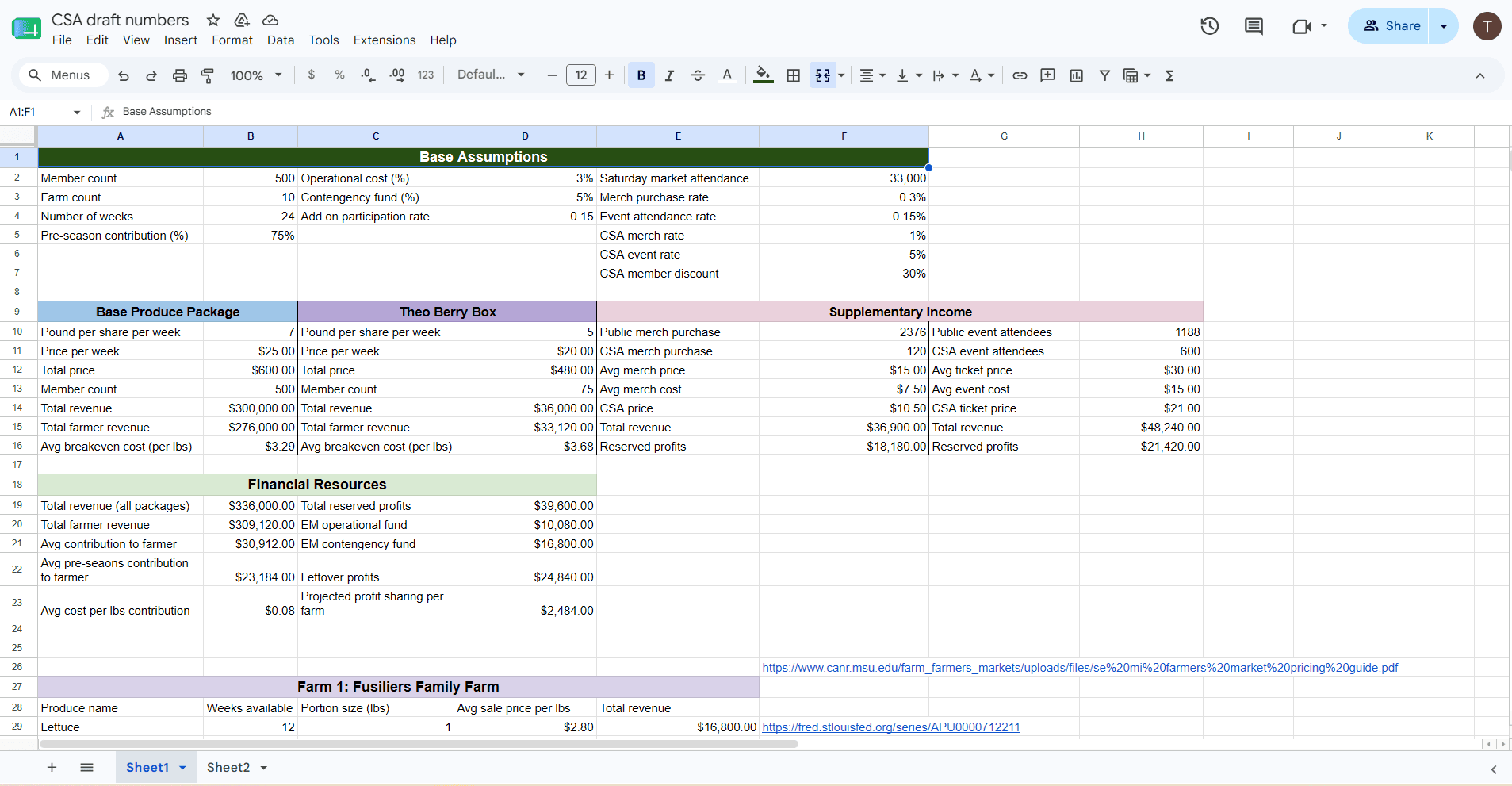
To ensure the concept was viable, we started by building the business standing—running "back-of-the-napkin" math and spreadsheets to stress-test the economics.
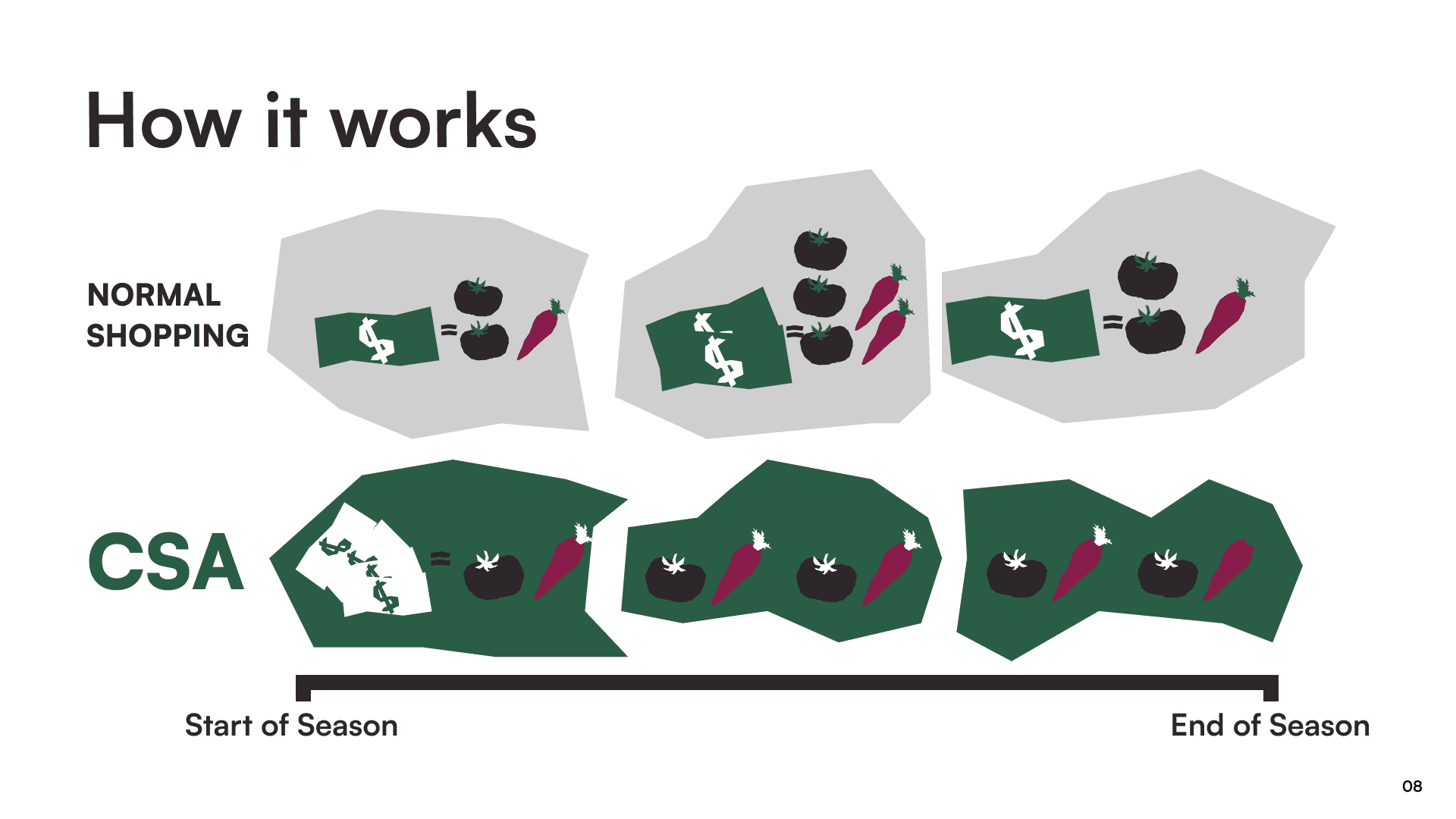
Community Support Agriculture (CSA) models offer a sort of farmer subscription. The consumer pays at the start of the season to receive produce throughout the year. These upfront profits help farmers extremely, as a majority of their costs are pre-season and the variability of returns stresses small farmers. Many farmers at EM already operate their own CSA but it add to their burnout as it requires a lot of logistics to operate.
Sample of a single season of a CSA
Intervention Philosophy
For the interventions we based them in our own theories of resilience that we developed throughout the research and prototype stages based on traits of other organizations or those we saw Eastern Market already exhibiting. They are simple:
Resilient organizations have functioning economy systems that allow the body to propel itself.
Resilient organizations must be easy to interact with to allow other people to propel it.
Resilient organizations are impactful and change the surrounding culture to motivate people to support it.
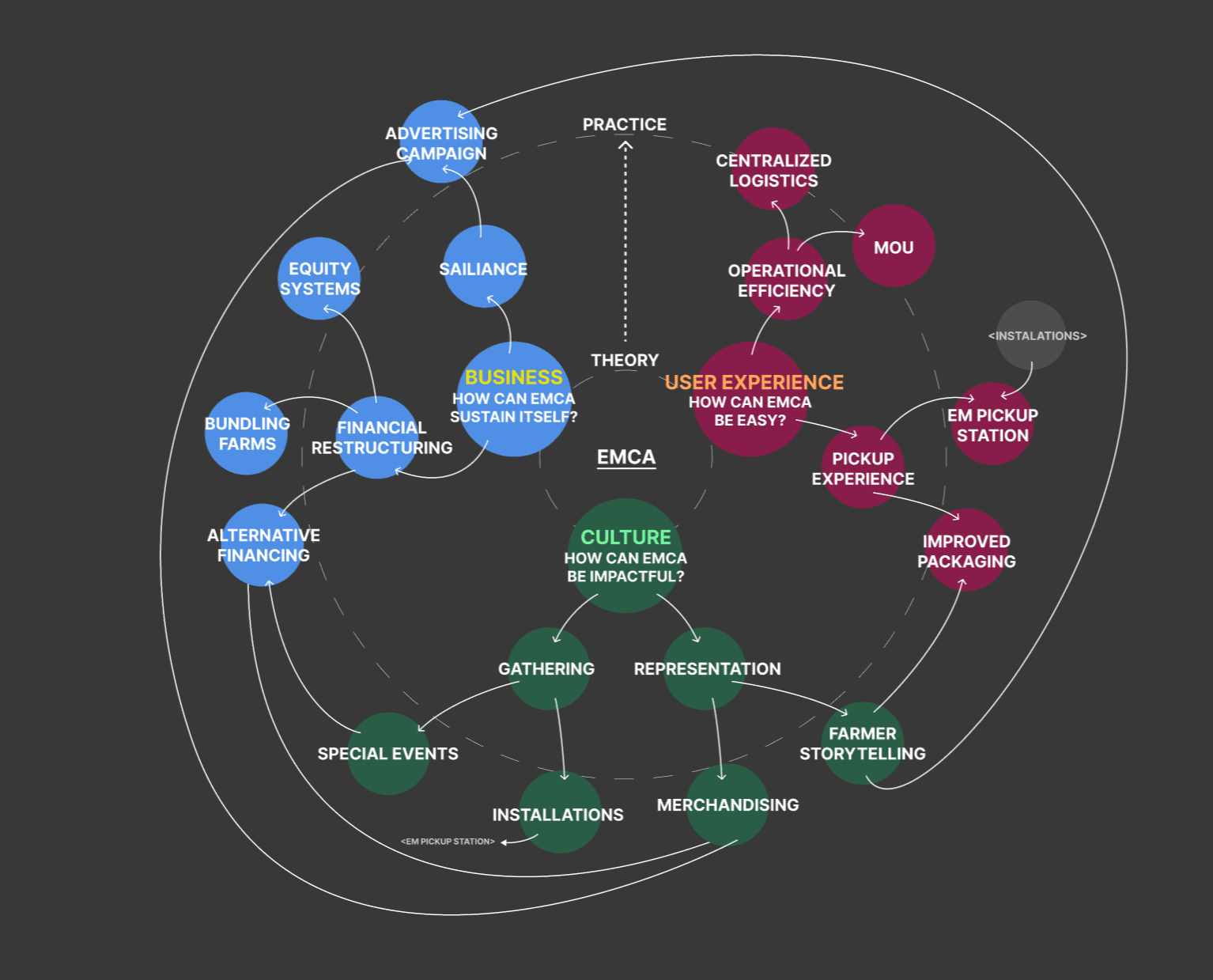
Map of Interventions from theory to practice
Business Intervention
To ensure our solution wasn't just a conceptual exercise, we rebuilt the underlying financial architecture into a collective-style Community Supported Agriculture (CSA) model. Designing for resilience meant engineering some squish into the system by building in a contingency and operational fund to absorb systemic shocks.
We then modeled as accurately as we could the financials for two real farms that could potentially integrate into the EMCA system. Under our framework, a sample small farm yielded $16,050 in guaranteed, pre-season contributions, while a medium farm projected $42,750. While these figures were comparable to their existing profit margins, our structural shift completely removed the volatility of week-to-week market reliance, securing their capital before the growing season even began.
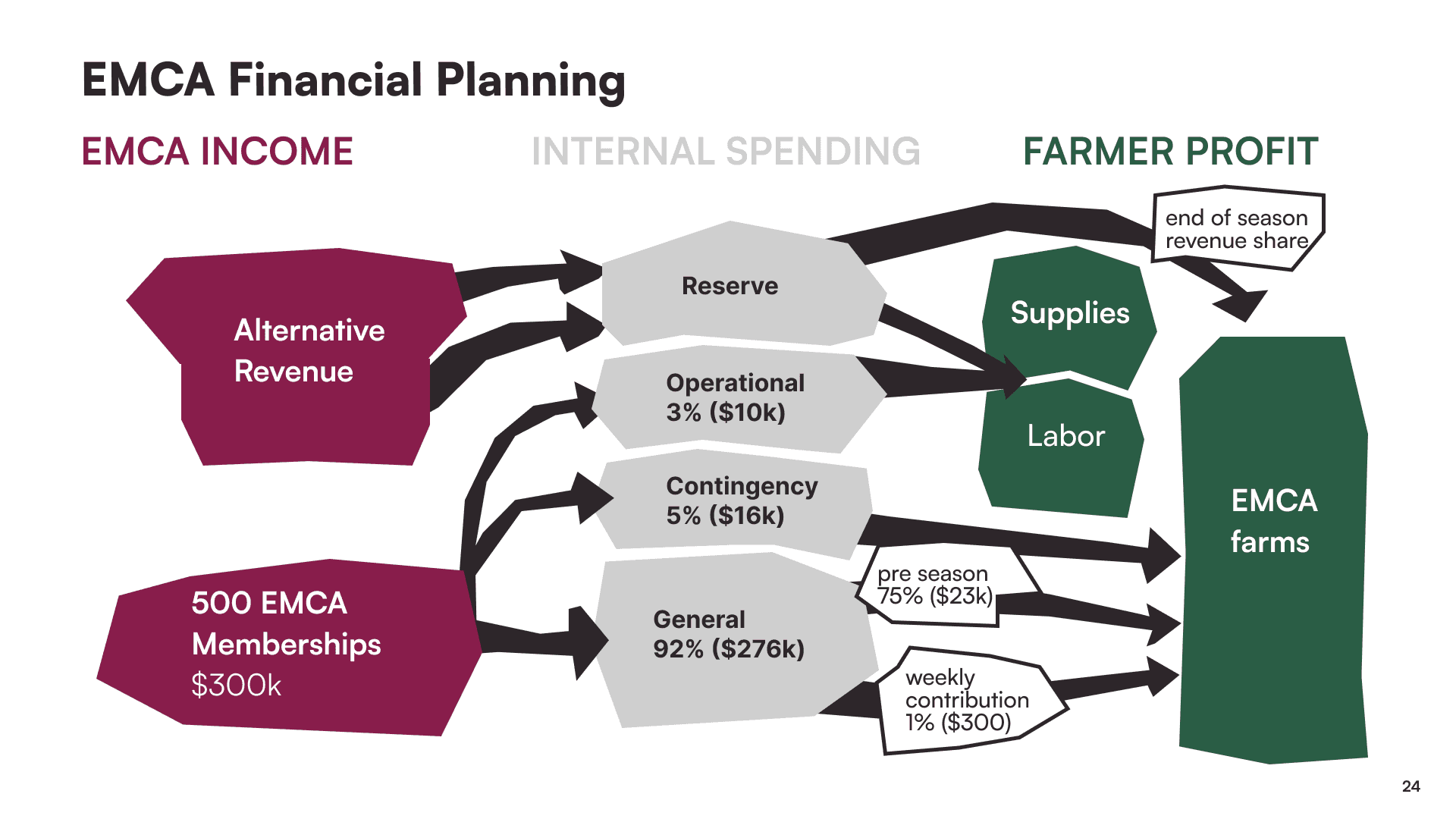
Planned Revenue Split Diagram
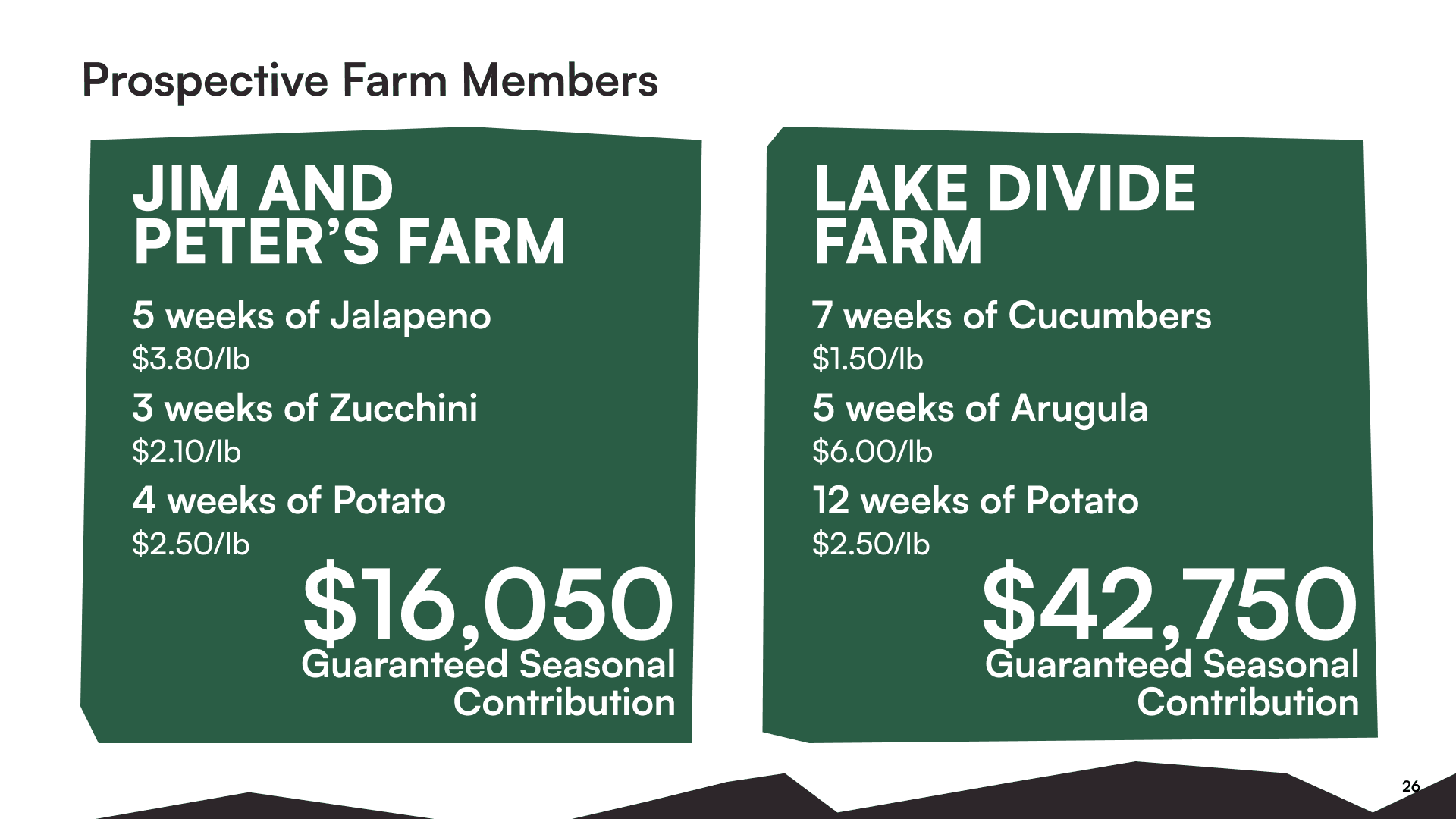
Modeled Revenue for Small and Medium Sized Farm
User Experience Intervention
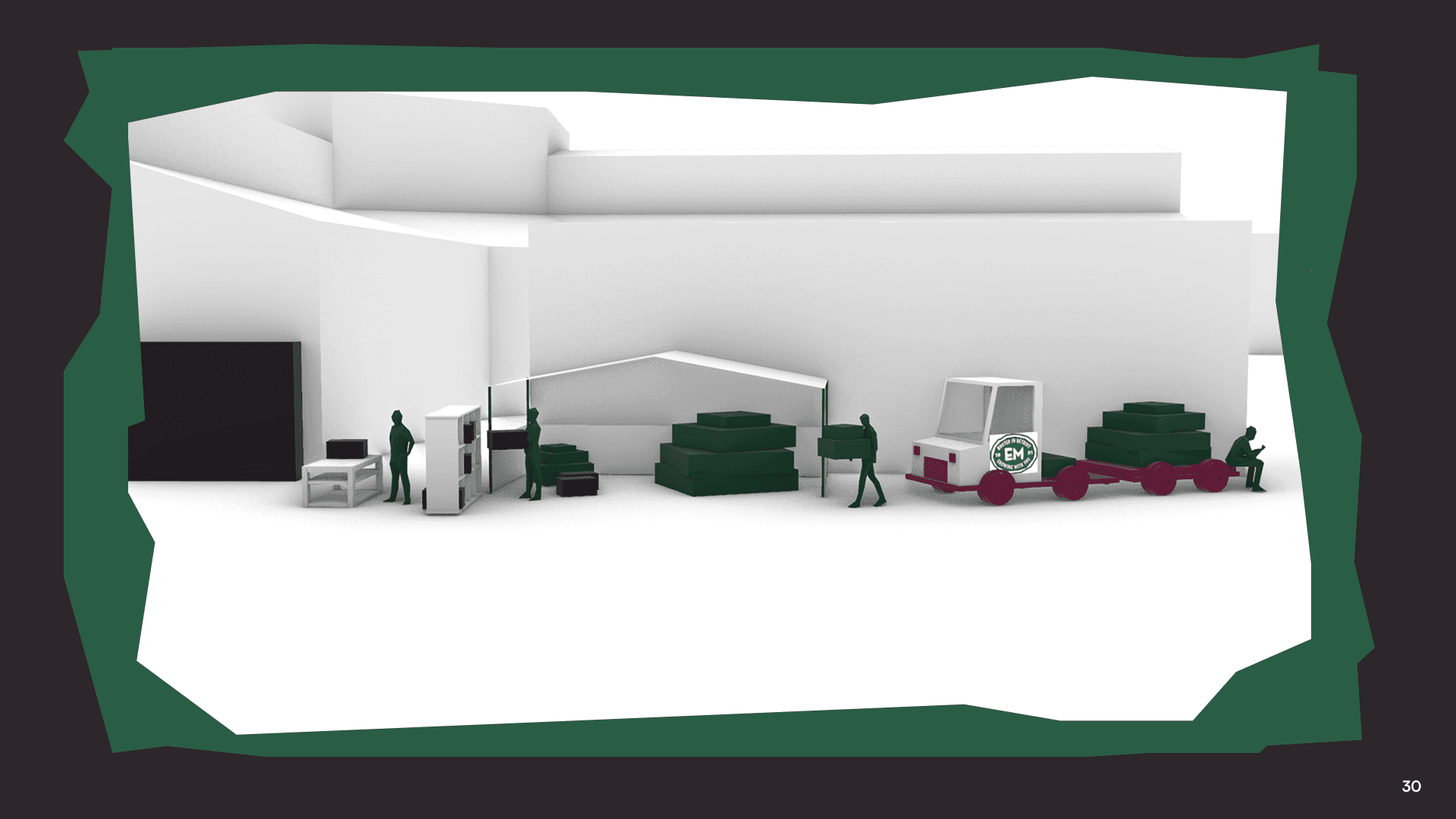
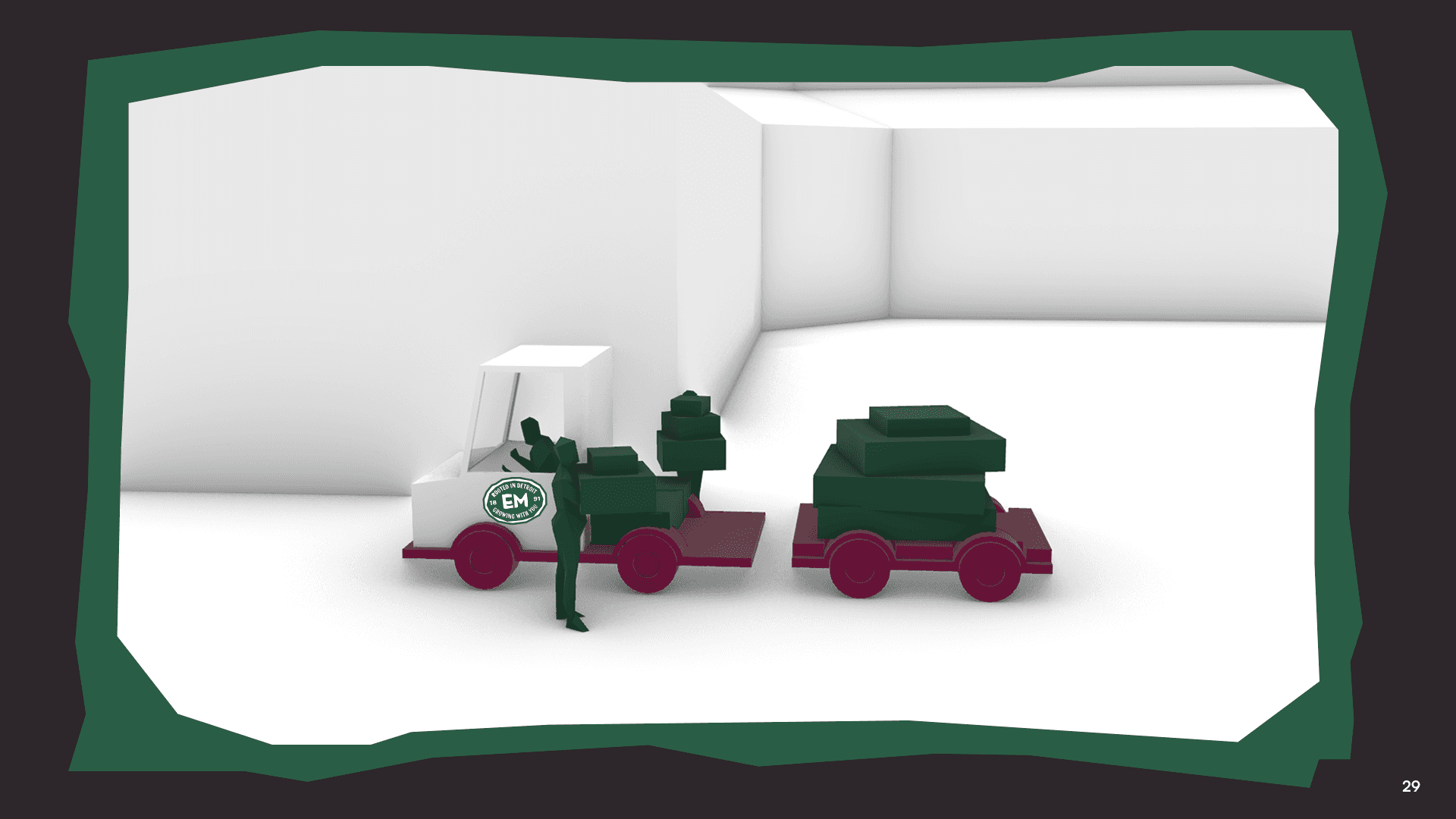
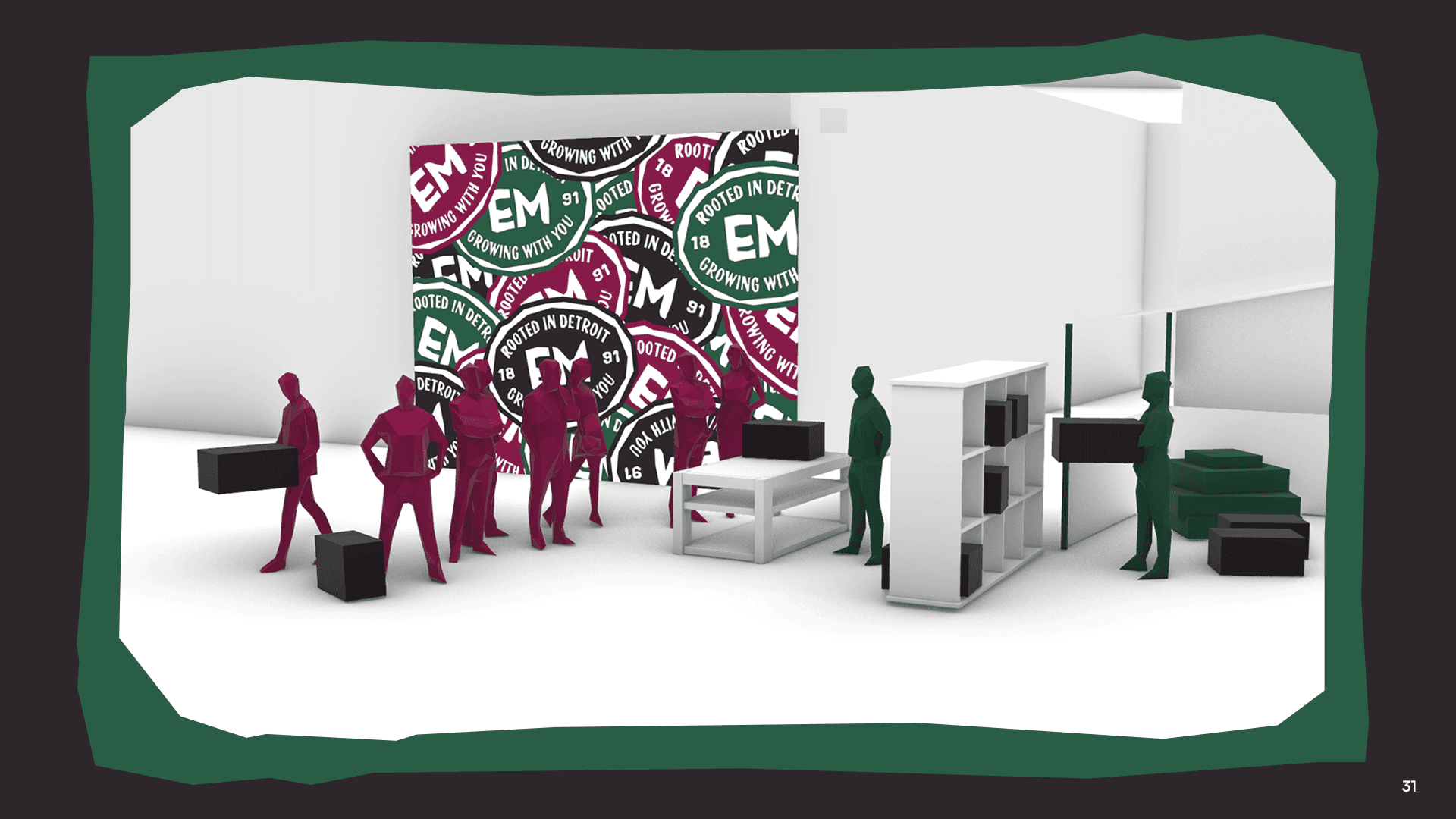
We had to spatialize the logistics. We realized the most effective way to help producers is to absorb their operational burden on site, this meant planning for social and physical infrastructure.
By positioning EMCA as the central logistical body, we effectively removed the friction of distribution from the farmers' daily responsibilities. This had us outlining an Memorandum of Understanding (MOU) between the organization and the producers, we identified an existing site capable of handling increased capacity, and designed the consumer pick-up zones hoping to design infrastructure that was easy to operate on top of.

Cultural Intervention
A resilient system must be loved. We saw the consumer value proposition as not just discounted access to produce, it was about cultivating pride in supporting local food networks.
The visual language of the project deliberately leans into the tactile, sensory experience of food (a response to the sterile, algorithmically driven food trends we identified in our research.) We focused heavily on the "un-boxing" experience, utilizing novel interventions to get consumers excited about their connection to agriculture:
Graphic Inserts: Included inside the produce box and presented first. These publications detail the specific food provided that week and include a survey to route direct feedback to the farmer. Furthermore, the inserts build the "food story" by featuring farmer histories, educational comics on agricultural concepts (like cover cropping), coloring pages, and local recipes.
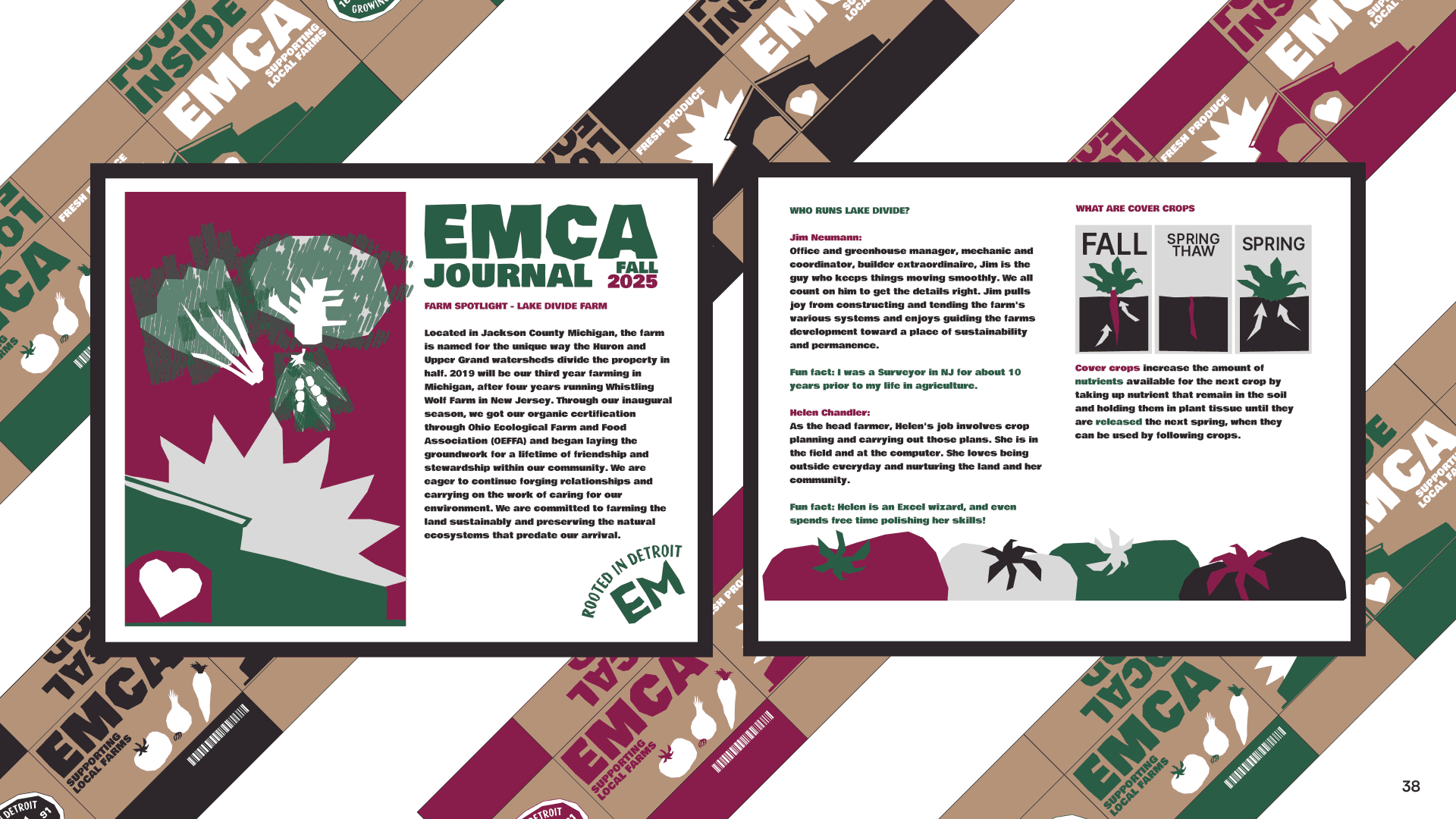
Insert into EMCA produce Box
Packaging: With the box we took an opportunity to think about the whole family experience when opening the produce which means engaging adults and children. We went for a look in the same aesthetic with opportunities for engagement like games printed on the box like a children's menu, the box focuses on food-related sight words to help build language comprehension as families unpack their produce together.
Advertisement & Merchandising: We built out the visual language of EMCA for physical and digital environments and designed merchandise, imagining how people could physically represent their pride in Detroit's local food culture.
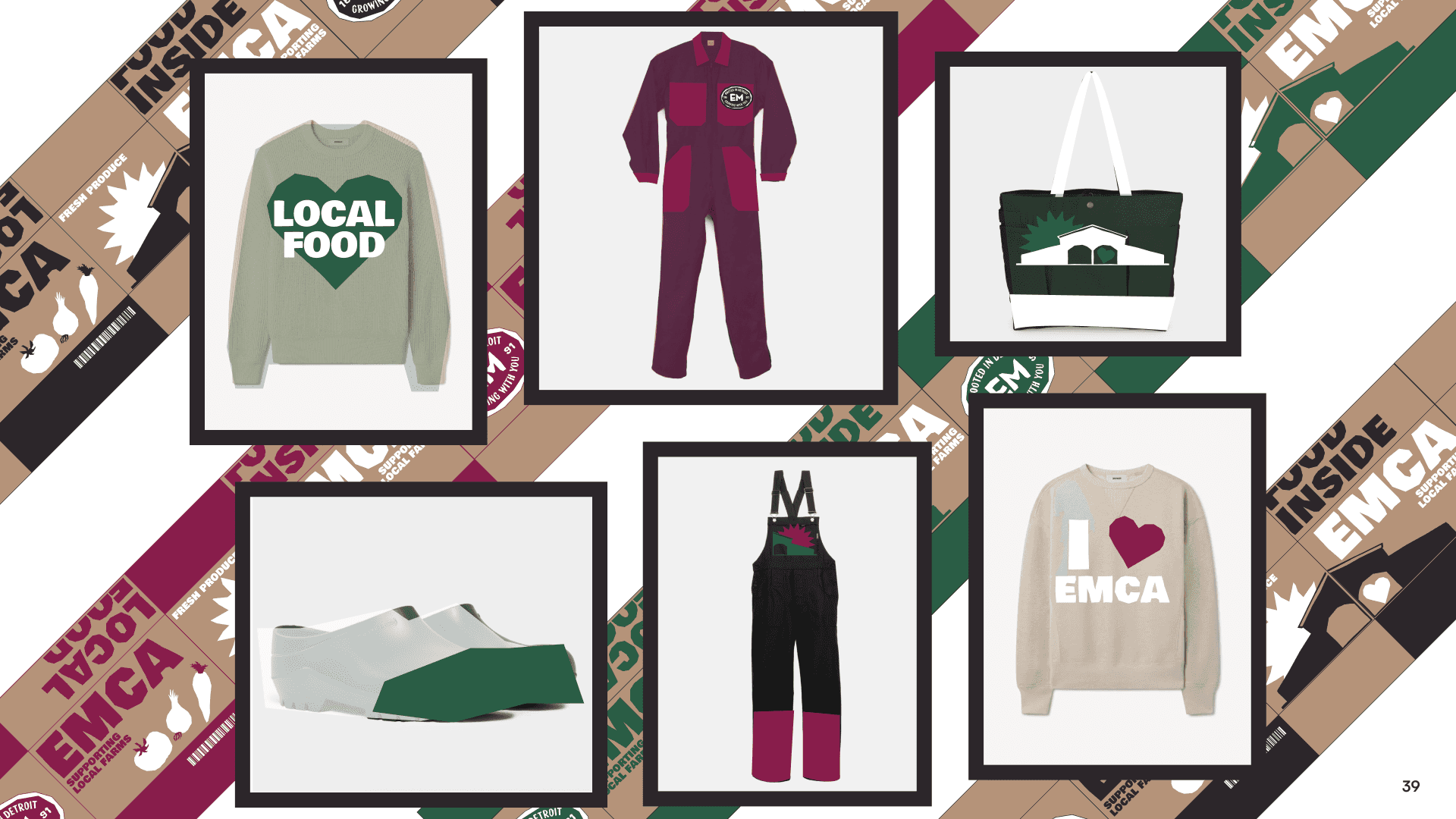
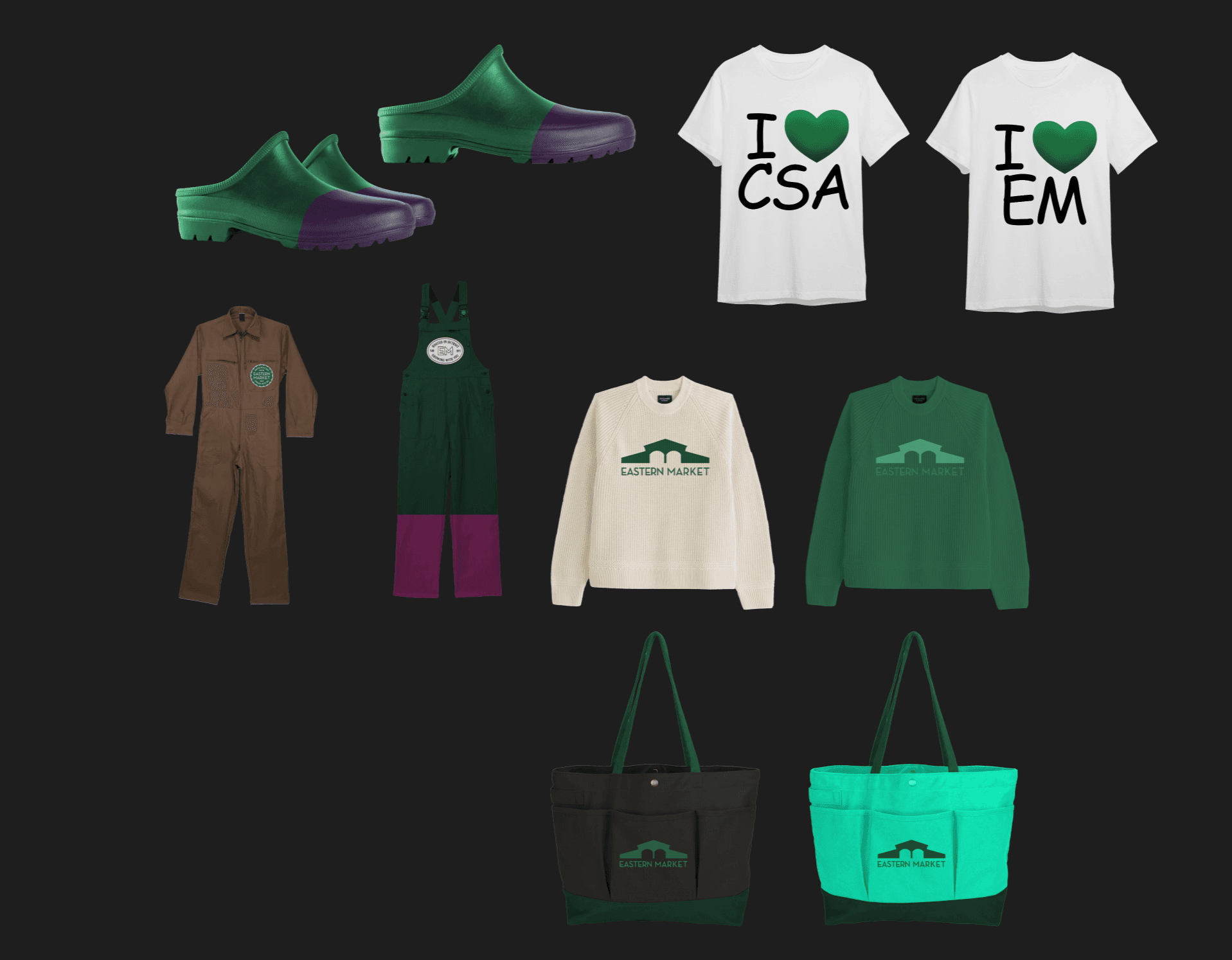
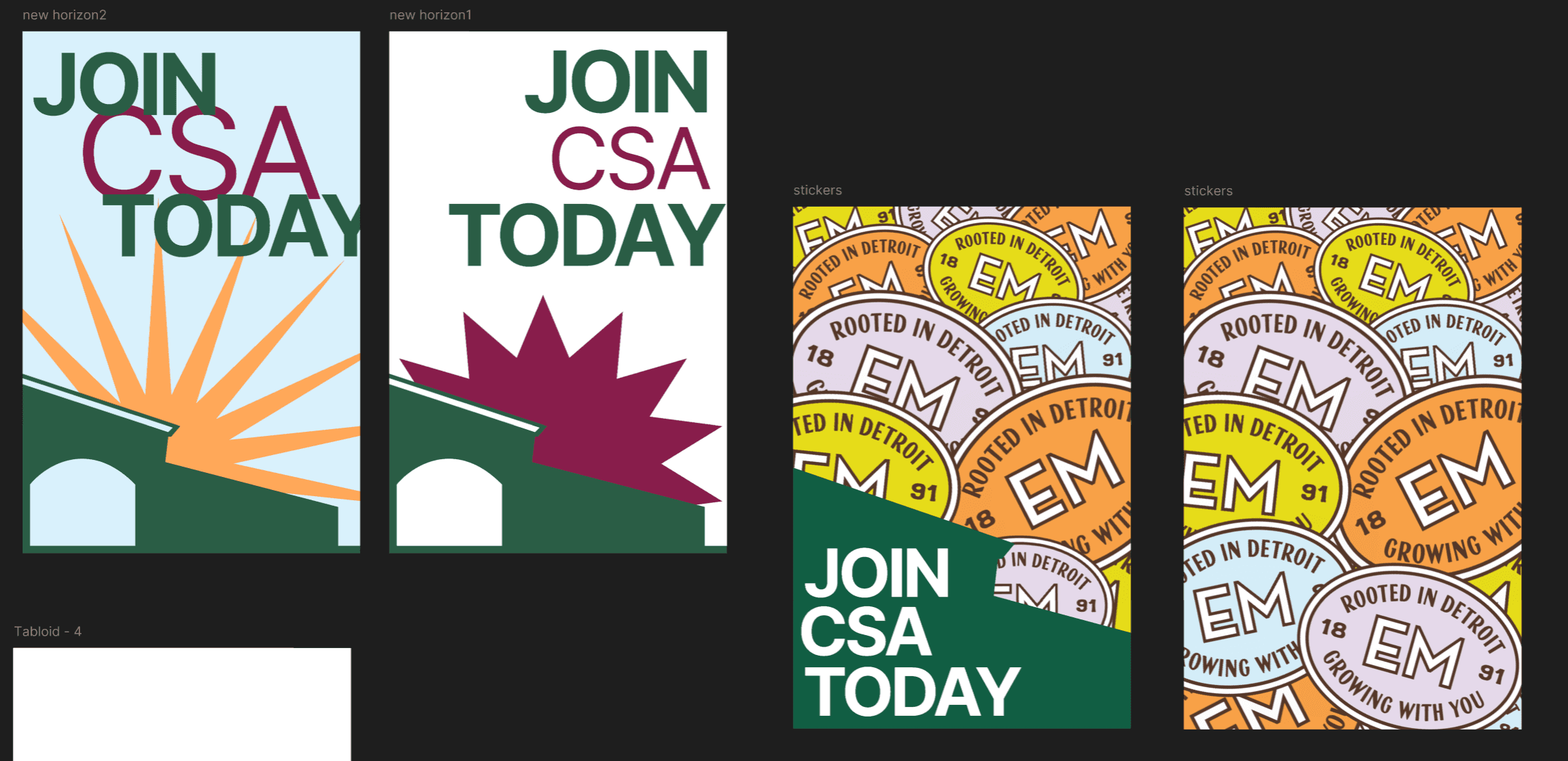

Digital Interfaces: Thinking about novel interactions to promote learning, I prototyped a video game in Unity where users collect food for their EMCA box while learning about urban agricultural concepts.
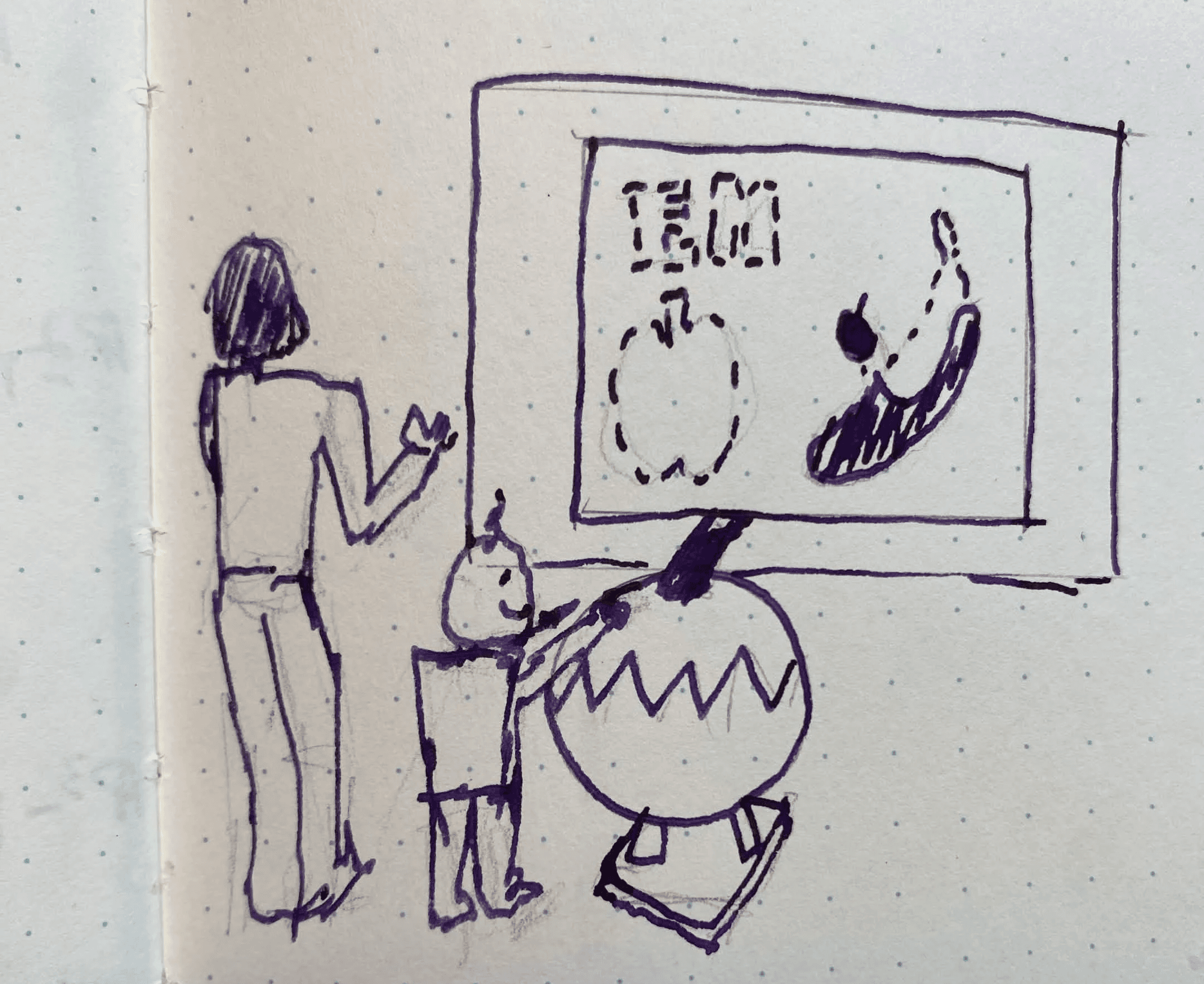
Sketch of Child with Interactive Tomato Controller

Early Prototype EMCA Game: Tomato Roll
Cultivating Resilience
To ensure this ecosystem remains resilient, we envisioned a dedicated organizational role: the "Food Storyteller." This individual would be in charge of continuously creating these interventions, working directly with EMCA farmers to evolve the market's identity.
Looking back at the ecosystem we built, we realized that true resilience is rooted in community; because ultimately, care is what dictates what survives. The pressures facing farmers are derivative of systemic issues created by long-ago politicians and corporate interests. What will truly make Eastern Market resilient is cultivating a culture that cares deeply about Detroit's food network.
We synthesized this into a final goal statement for EMCA: "Making Detroit's Farmers Resilient by creating a reputation for Detroit Produce." As a guide for future Food Storytellers, we drafted a manifesto for what Detroit Produce means, a set of tenets we expect to evolve alongside the market itself:
The Detroit Produce Manifesto
Reflects the changing of the season.
Combines good taste with modern knowledge of health and well-being.
Combines self-sufficiency with regional sharing of high-quality produce.
Hopefully through this culture, Detroit Food becomes globally recognized within a system where farmers are not only supported to just farm, but are celebrated as the visible centers of the urban food system.
Extra
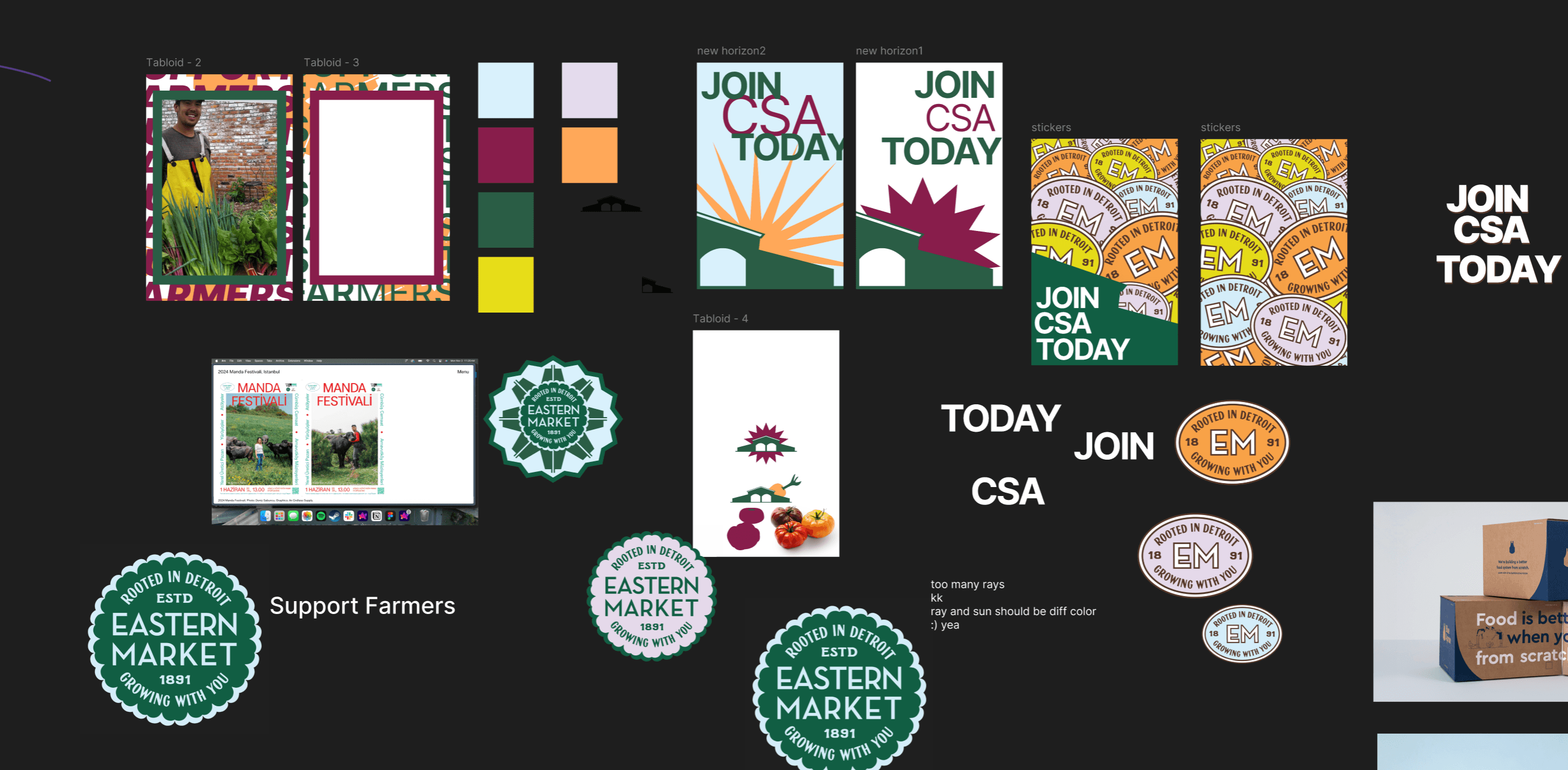
Adapting the Existing Brand to New Visuals
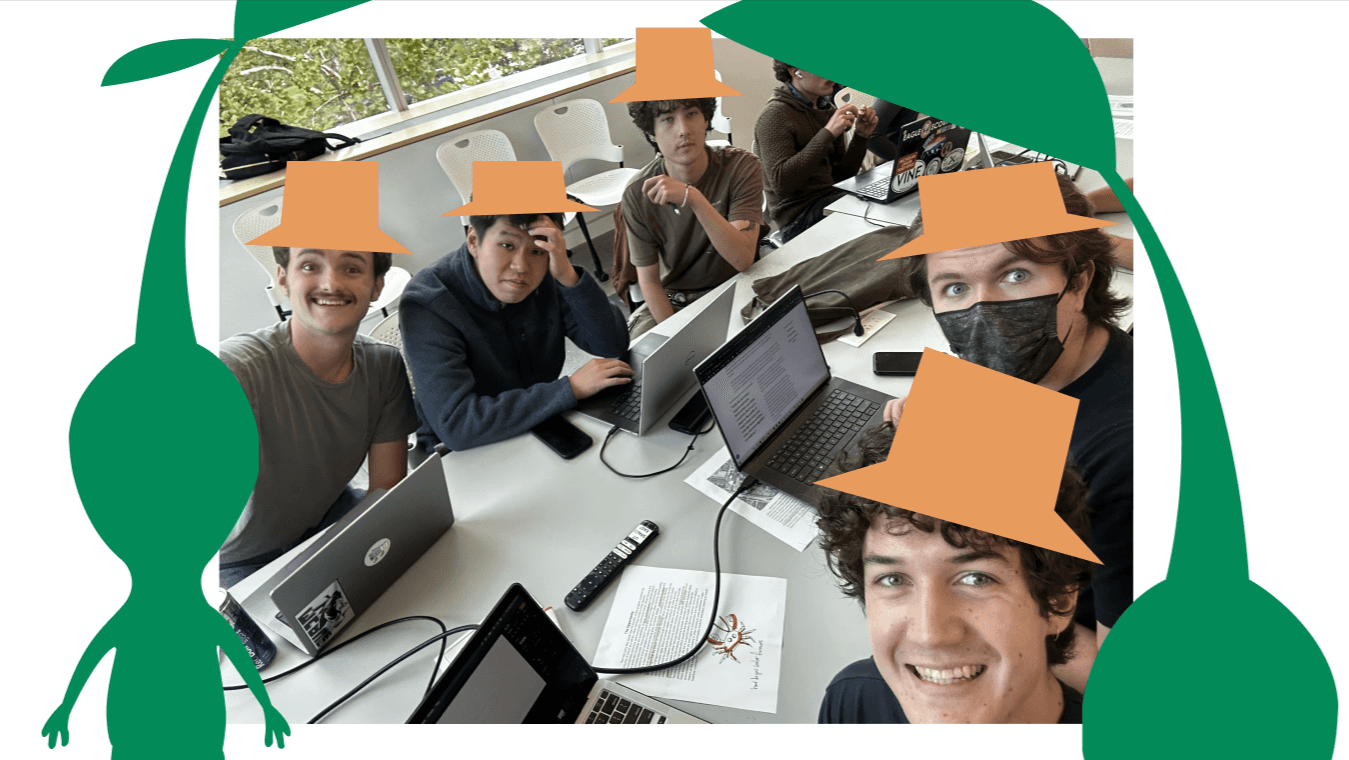
First Meetup
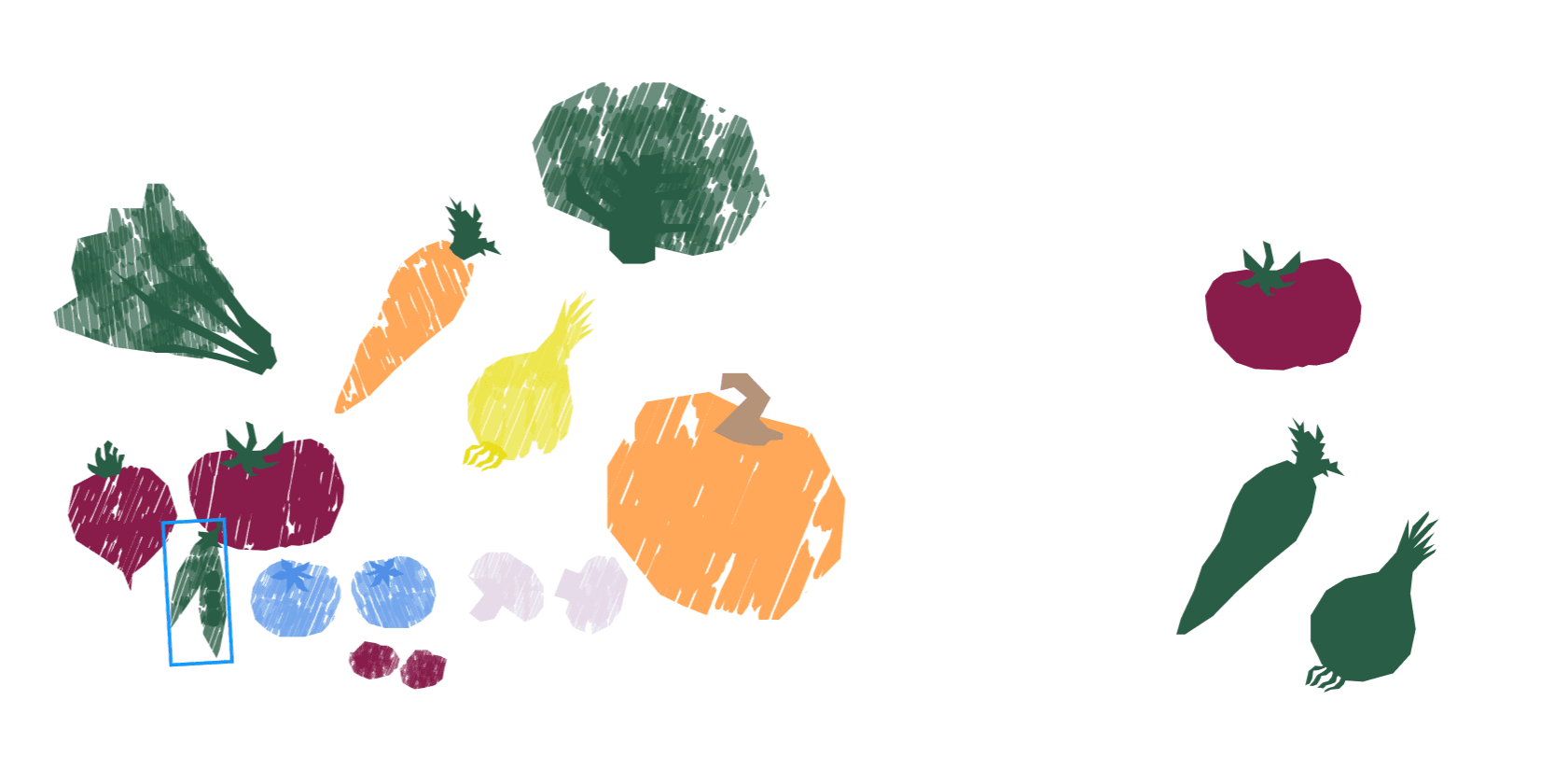
What should the food look like?
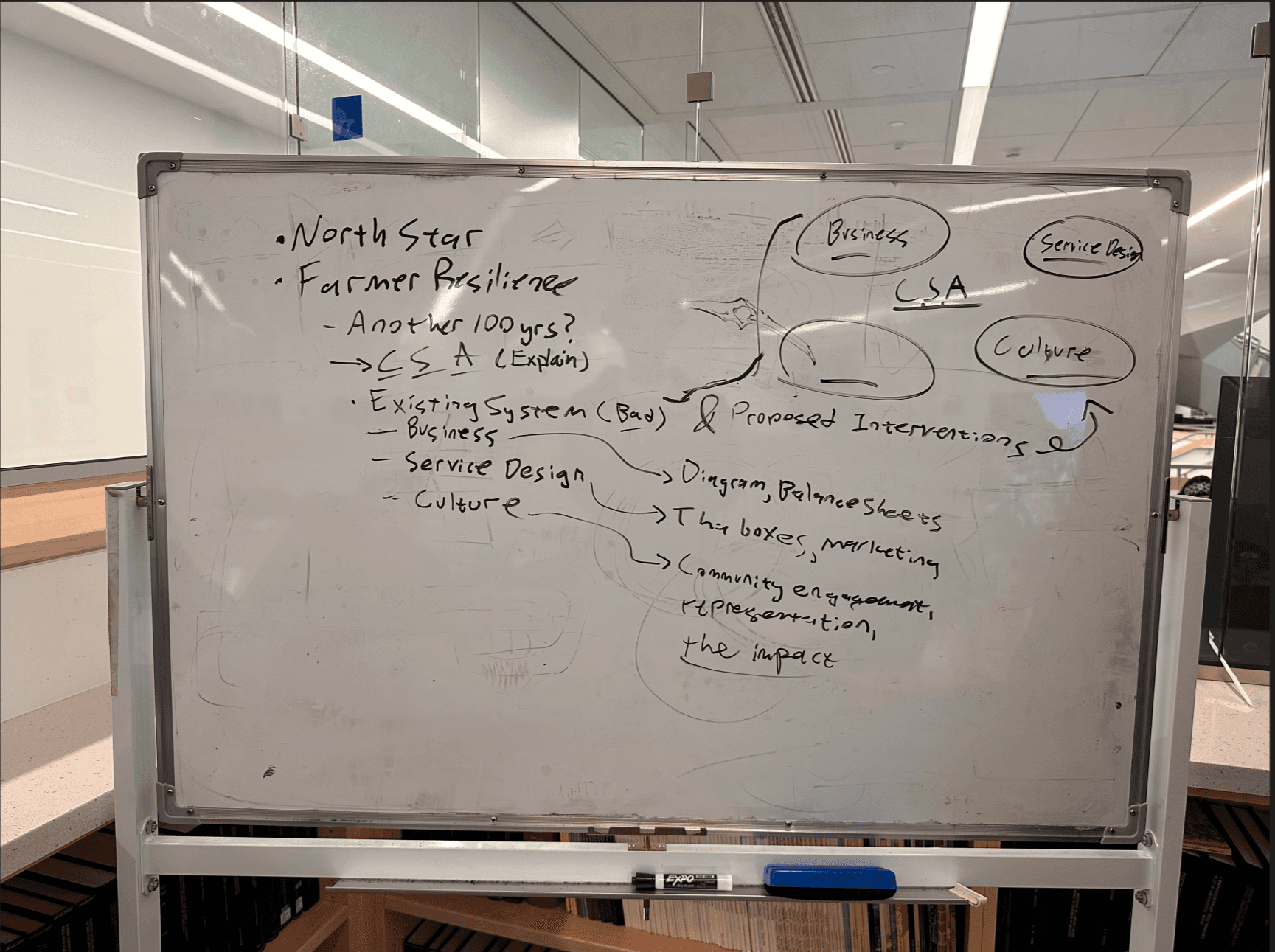
Too Many White Board Sessions