NYC Tree Map
NYC Tree Map
DEC 2025
2 weeks
Gallery Installation
Touch Designer
The conceptual foundation for this piece stems from a tour I had of the Los Angeles Department of Transportation's ATSAC room (a massive, 1980s-era traffic control center built for the '84 Olympics.). The back wall of the room is entirely monitors, with various traffic metrics, camera feeds, and maps of the entire city. Watching the system operate, I noticed parts of the map that were never rendered. I learned this is due to physical infrastructure failures, such as copper theft, which cause entire intersections to drop off the grid, rendering parts of the physical city digitally "invisible."
This phenomenon of systemic blind spots became the driving concept for the gallery piece. By pairing the aesthetic of mid-century government surveillance with a dataset of organic street trees, the project explores the friction between nature and technology, and questions who gets to be seen on the urban map.
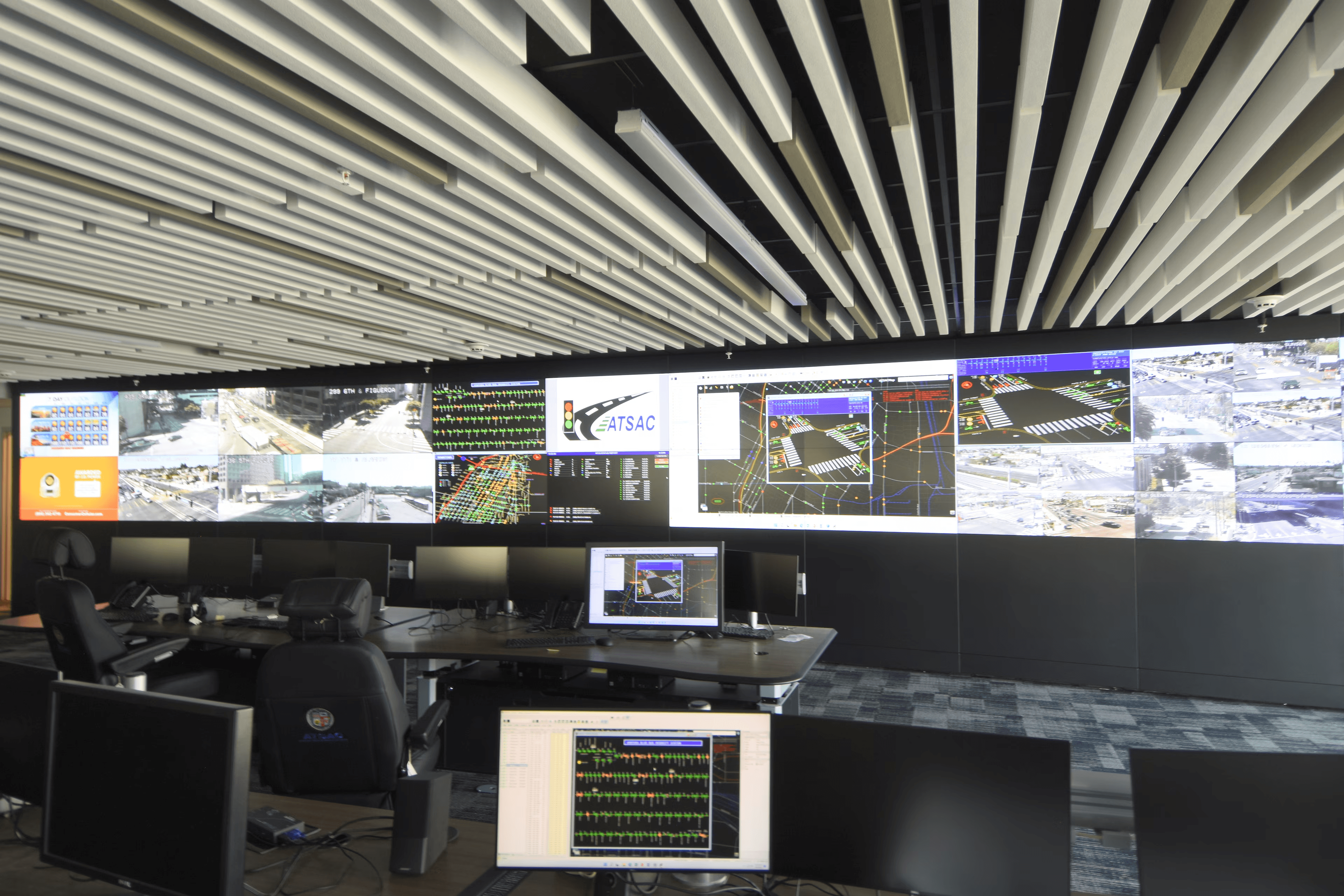
Advanced Transportation System and Coordination (ATSAC) Control Center
Photo: Los Angeles Department of Transportation (LADOT)
The backend consists of four major components: the text renderer, the data renderer, the image renderer, and the logic controller. The tree database and accompanying images are loaded before the piece displays. The logic controller then selects a specimen, dynamically updating all visual features to match.
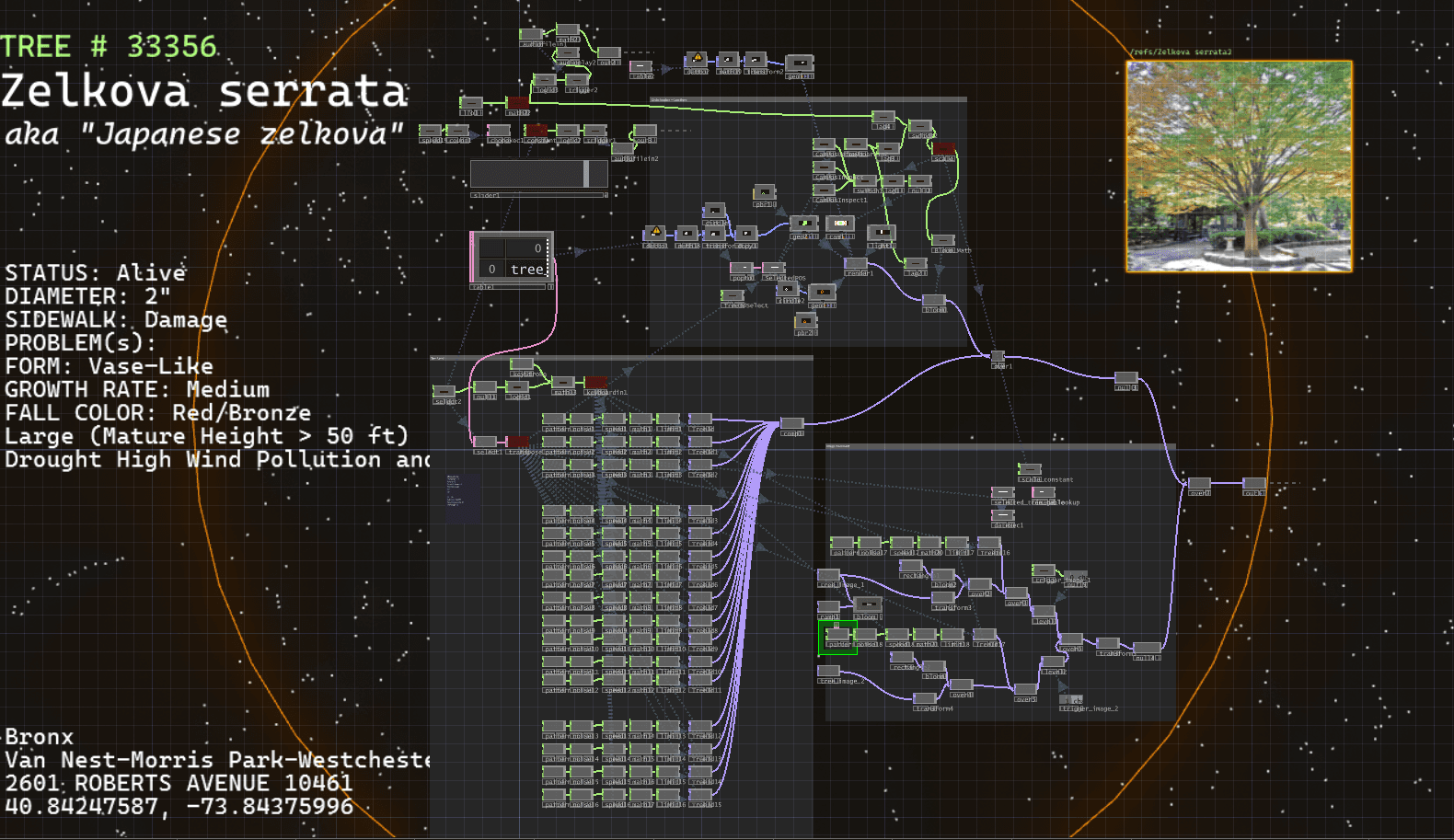
Entire Workspace
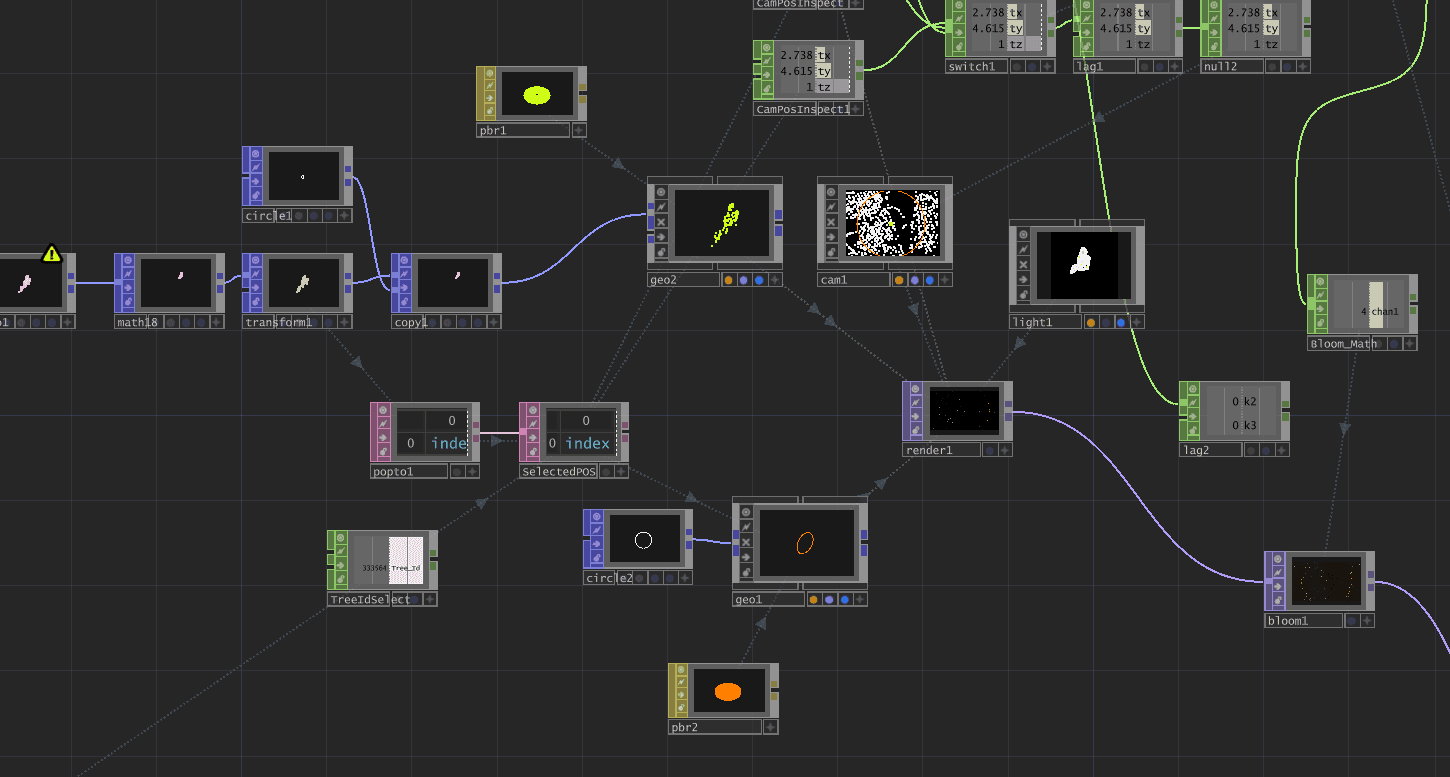
Data Render + Material Setting
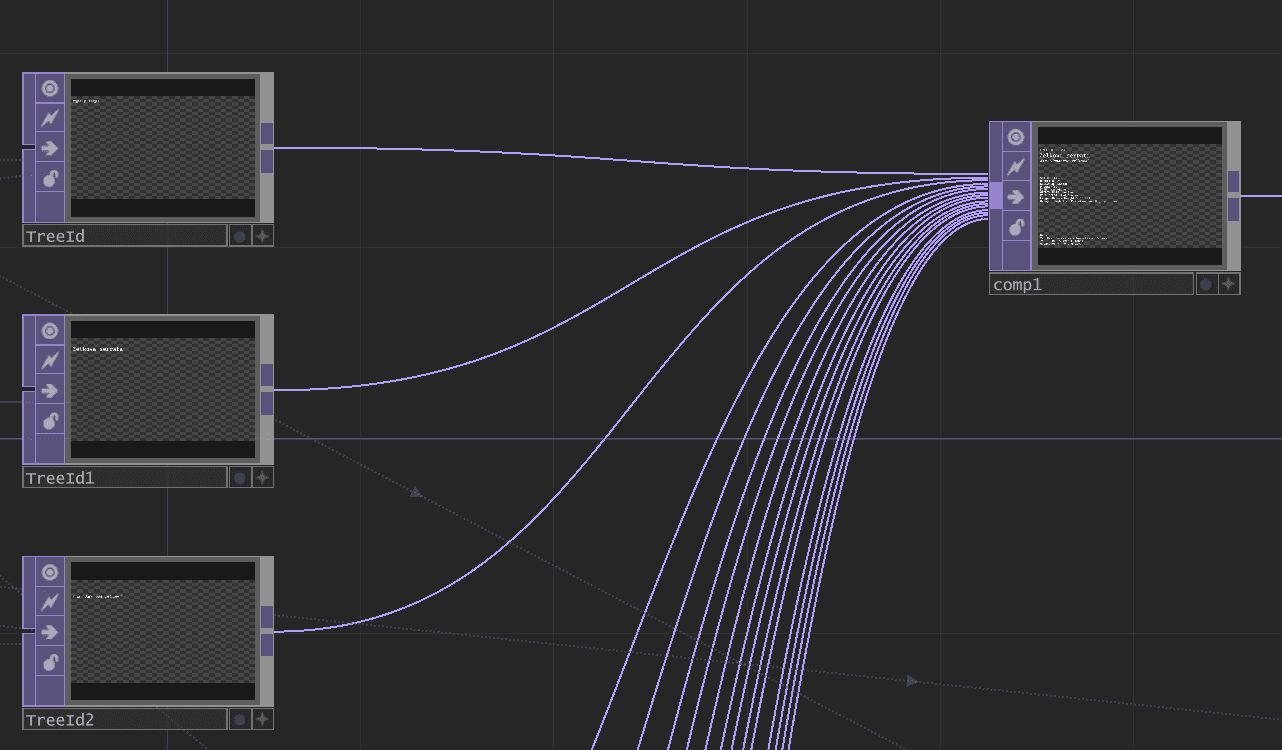
Compiling of Text
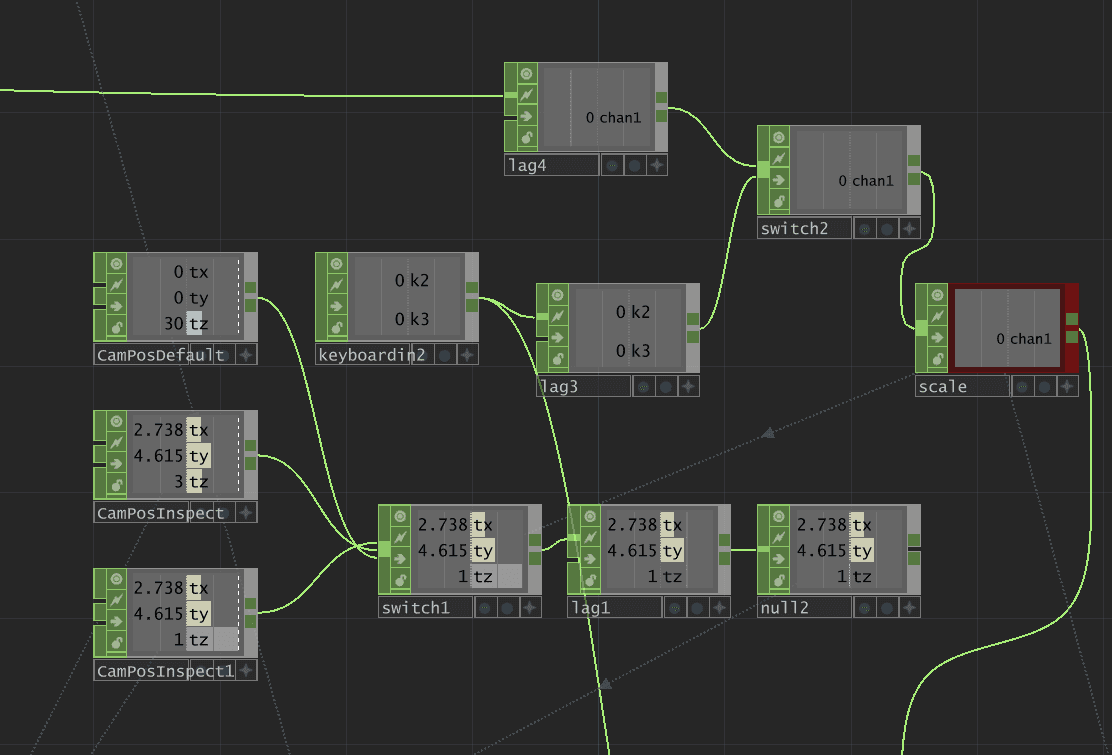
Camera Controller
The visual language deliberately leans into retro-technological materiality. The visuals rely on physically based rendering (PBR) materials for the data points, paired with post-processing camera effects like heavy bloom and haze to emulate the glow of a CRT monitor.
This hyper-curated, government-dashboard aesthetic deliberately distances the viewer from the subject matter. The data points represent unique trees, yet they are rendered as homogenous glowing dots. As one gallery attendee noted, "this is the evil way to walk through a city and see the trees." The species images and descriptive text provide raw data, but they strip away the sensory experience of the tree itself. You don't see its context, you don't smell it, see it. I think this way it is impossible to truly understand the tree.
Ultimately, this aesthetic framework forces the viewer to confront what is missing. Within a visual language that mimics omniscient surveillance, the tree-less streets of New York appear as absolute voids. They remain unexplored and unspoken for.
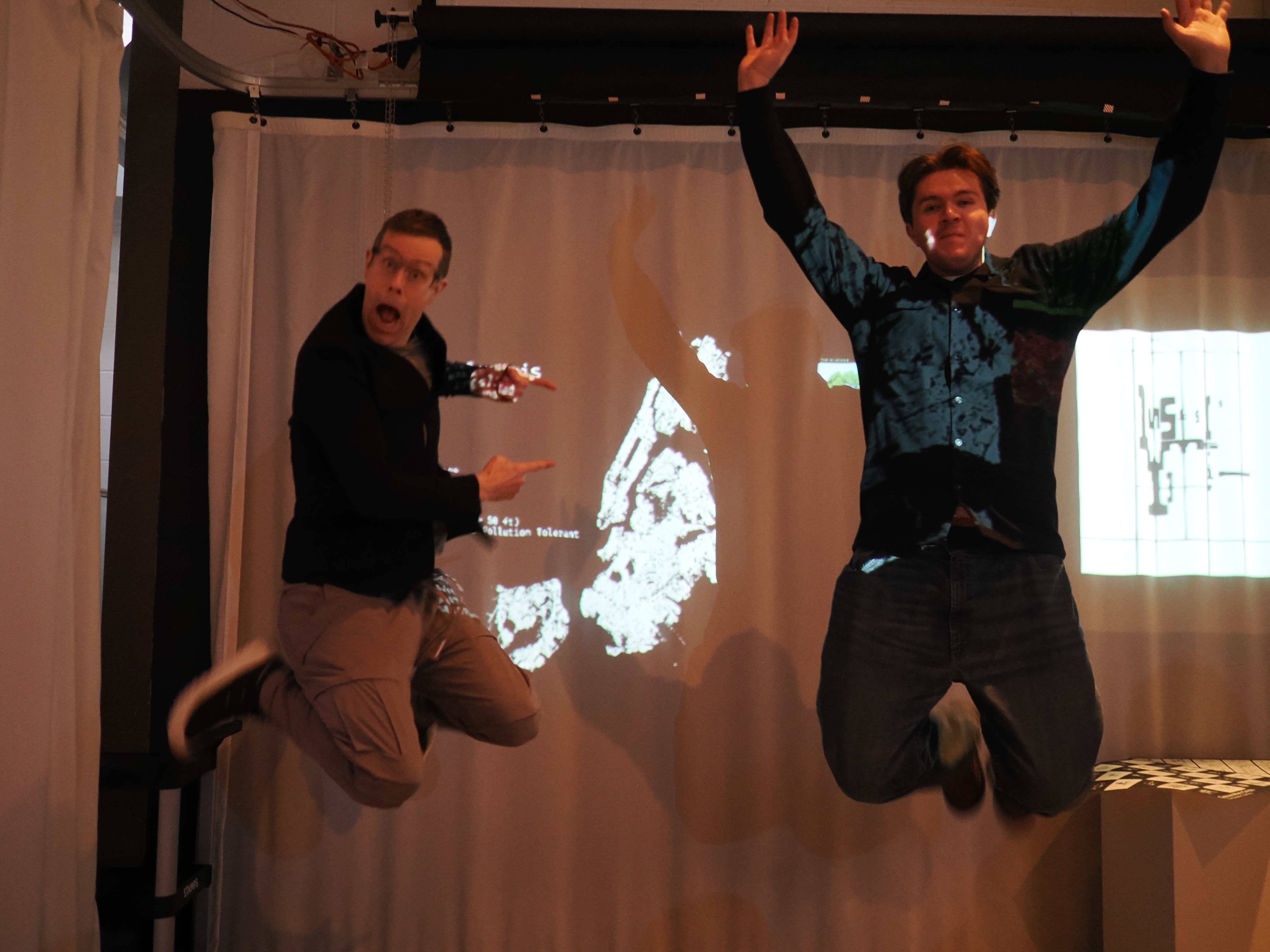
Jesse Stiles and I Celebrating
Note on the process: Stepping outside of traditional urban planning to build this as an art piece revealed to me the vast potential of these tools. I am a firm believer in Touch Designer now and believe it is capable of being an instrument of powerful storytelling for the urban environment. I think it is highly capable for data visualization and interactive renderings that have not been highly explored. I am eager to use the software more in the future.